The llama is off the leash

The prep is finally done and the paint is almost dry — “Let the Llama loose” is the cry heard round the living room! I’ve been slow getting this animal off and running due to my technology handicap, and difficulty figuring out how to map my Llama URL through WordPress, but Mïa and Cliff have been instrumental in making this happen. My many thanks go out to them both! Drinks are on me when we see each other next.

I’m also involved in this reality television project, which has become life consuming. We’ll talk more about this in the very near future. Suffice to say it has curtailed my time and vision for figuring out the minutia of blog technology. Regardless, the Llama has overcome and is prepared for launch. There may be some turbulence at the beginning, so grab your knickers gents and hold tight, the fun is about to begin…

Posted in Events, News | Tagged , | Leave a comment

Indigo Rhythms: Iowa Blues Color the Heartland

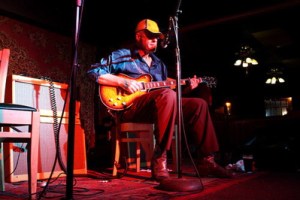
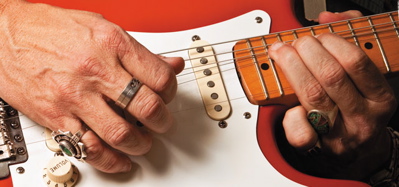
Bent notes pour from a vintage Fender Stratocaster under Bob Pace's command. | Photo by Scott Allen

Bent notes pour from a vintage Fender Stratocaster under Bob Pace’s command. | Photo by Scott Allen

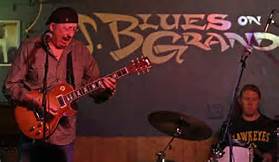
Bob Pace & the Blues Groove are tearing down the house tonight. With a swagger in his step, the frontman backs away from the microphone and begins a musical conversation between his guitar and his audience. The drummer, bassist, and keyboard player lay down a backbeat as Pace takes his guitar for an improvisational stroll, squeezing out searing guitar leads. His expressive play is both call and response. One line of chords is contemplative, stating a simple fact in civilized tones, ending with the equivalent of, “What do you have to say about that?” Pace pauses for a brief second, taking his hand off the strings before answering, then attacks his fretboard, bending off high-pitched screams in response that have him up on his toes trying to eek out the notes. With the slightest nod to his band they come roaring back into the mix with a vengeance, raining a sea of blues down upon the room.

Standing a solid six feet tall with a lean build, close cropped salt-and-pepper hair, and circular wire-rimmed glasses, Pace, 54, bears a passing resemblance to Eric Clapton, especially when he picks up a Fender Stratocaster. He grits his teeth and kicks his foot into the air as he deftly wields his guitar and commands the music. The crowd surrounding the stage cheers for more, and Pace returns to the microphone and finishes off the tune, singing “I want to rent my soul to the Devil, and eat pancakes everyday.”

Much of downtown Des Moines is sleepy on a Tuesday night but not the intersection of 15th and Grand. Perched on the corner is the hardest working blues club in Iowa. With its neon sign glowing and the unmistakable sound of railing guitars spilling out onto the streets, Blues on Grand has been delivering the area’s best live blues performers since 1992.

Bob Pace slinging his groove at Blues on Grand in Des Moines.

Bob Pace slinging his groove at Blues on Grand in Des Moines.

Home of the legendary Blues Jam every Thursday night, where emerging artists and accomplished players alike can get their riffs off, Blues on Grand books live blues at least five nights a week and takes great pride in encouraging original music from their balanced attack of national, local, and regional players. Inside this ain’t no gussied up country club; it’s dark and dingy with framed photos of famous musicians disjointedly mounted on the wall by the stage. The air is thick with history from the good times, bad times, and hard times had by all who have passed through the door. In the back, where the Iowa Blues Hall of Fame is housed, graffiti covers the walls, doors, and ceiling. This place reeks of the blues.

Behind the bar, under a sign declaring, “Beauty is in the eye of the beer holder,” owner Jeff Wagner is pouring shots (a few for himself) and generous portions of his encyclopedic knowledge of blues performers. “There’s something about the Blues that reaches into your heart and draws you in,” he explains. “There’s no other form of music that does that.“

Iowa’s Hybrid Sound

Discussions about blues music hotspots often revolve around the usual suspects — Chicago, Memphis, and the Mississippi Delta. Yet with Iowa’s eastern border defined by the Mississippi River (a main artery traveled by the original blues masters coming out of the South) and the state sitting at a crossroads, equidistant to several large metropolitan cities like Chicago, St. Louis, Kansas City, Milwaukee, Minneapolis, and Omaha, Iowa has developed its own blues tradition.

How this blackest of musical genres found its way into one of the whitest states can be explained by a combination of forces: Iowa’s proximity to major blues-migration towns like St. Louis, Chicago, and Kansas City; the state’s location on the river and railroad network traveled by musicians; and the discoveries by local musicians of Delta-based recordings from the likes of Howlin’ Wolf, Muddy Waters and John Lee Hooker.

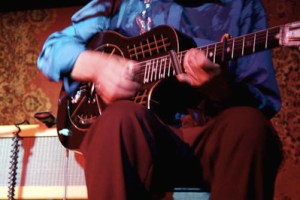
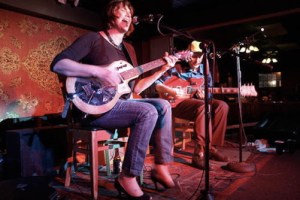
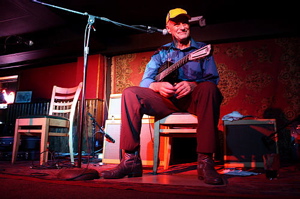
Joe Price is a traditionalist and like a blues classic, he favors a National Reso-Phonic guitar.

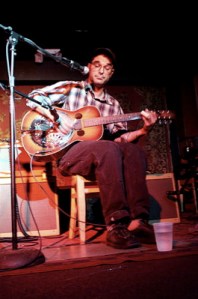
Joe Price favors the traditional sound of a National Resophonic guitar. | Photo by Julie Staub

The blues originated in the Mississippi Delta as a form of protest music developed by slaves. After their emancipation, these Delta sharecroppers headed north, resulting in large African American populations being established in Memphis, St. Louis, Detroit, and Chicago. As these people migrated, so did their music. After being exposed to urban living and industrialization, the rural-based acoustic instruments were electrified to compete with the noise of streetcars, factories, and the towering concrete landscapes that echoed the sounds of big-city living.

Iowa, like Mississippi, is a rural-based state where life can be challenging. Livelihoods depend on working land that’s susceptible to drought and flood. This pastoral countryside of farmland stretches beyond the eye and doesn’t necessitate an electric sound, but it’s here all the same. A slow progression of blues, rock, country, honky-tonk, and folk music have all drifted into the state and commingled with the corn-fed inspiration found in Iowa, simmering into a unique hybrid of heartland blues.

The sound and lyrics tell the tale of small town living, about one-stoplight towns with shuttered businesses, places that in the near future will cease to exist. The songs depict life on the farm, the cycle of birth and death, the hardship of a lost harvest, the relief of a good summer rain, the salvation of a strong batch of sweet corn whiskey. It’s also about people and simple pleasures, like a summer picnic with family and friends, playing some music, and shaking your tail feathers.

“Tell me who’s that girl; Standing six feet tall; She’s out on that dance floor; Doing that Iowa Crawl” ~ Joe Price, from The Iowa Crawl.

“It’s about dancing,” says Joe Price, a veteran blues player and Iowa Blues Hall of Fame member who wrote “The Iowa Crawl.” “People love to dance out here. This ain’t no Chicago, but the scene here is alive and well.”

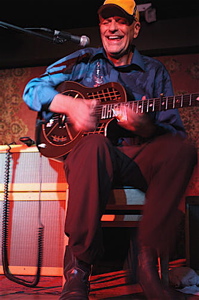
With feet stomping and fingers sliding, Joe Price has been bending notes for over 35 years. | Photo by Julie Staub

With feet stomping and fingers sliding, Joe Price has been bending notes for over 35 years. | Photo by Julie Staub

Rarely seen without his trusty ball cap on, or a National Resophonic steel guitar within arms reach, Price is a picker and slide guitar man extraordinaire. Captivated by electrified country blues, he bends a mind-numbing set of notes, and accompanies his playing in near-defunct street corner fashion by slapping his feet on the stage to create a tremendous display of sound and fury.

Now living in the northeast corner of the state, on the Mississippi River in Lansing, Price has been churning out his unique version of gutbucket country blues for over 35 years. “Chicago had a big impact here. Those blues singers from Chicago came through here in the late 60s and all through the 70s and 80s. It was such an impact on the white kids,” remembers Price. “You gotta remember there wasn’t no CDs out of these guys like Muddy Waters and such. You had to seek them out and buy their records off the stage when they played.”

Artists like John Lee Hooker, Clifton Chenier, Hound Dog Taylor, and Koko Taylor would travel along Interstate 80, through Illinois and Iowa on their way out to California, and would make stops in the Quad Cities, Iowa City, and Des Moines, exposing crowds to their homespun styles and attitude. That’s an impact Iowa has never felt again (and probably never will since most of the original blues masters have passed away), but their influence lives on in several generations of current Iowa musicians.

Earl Hooker

Earl Hooker

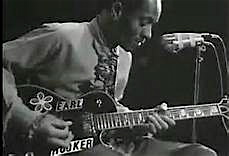
Price, 58, began his career in Waterloo, where he had the fortune to meet Earl Hooker, one of the greatest slide guitar players to ever live. Hooker, whose cousin was John Lee Hooker, moved to Waterloo for a time, and Price would catch him gigging in music stores.

Once he saw the slide there was no going back.

“Earl showed me how open tuning went and told me to get a bike handlebar to use for a slide,” says Price. “So I ran over to my neighbor’s house and pulled the plastic thing off the handle and sawed the metal end off.”

He’s been twanging ever since.

On the Margins 

While there is an established blues scene in Iowa, it remains a work in progress, if not a work in recession. Joe Price is right; this isn’t Chicago. With its rural-based landscape, Iowa lacks such population density and racial diversity, which makes finding gigs and drawing consistent crowds a problem.

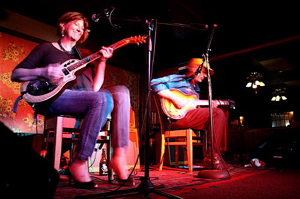
Joe & Vicki Price jamming at the Mill in Iowa City. | Photo by Julie Staub

Joe & Vicki Price jamming at the Mill in Iowa City. | Photo by Julie Staub

Iowa is a conservative state, and work comes before play. Going out to hear live music is often a distant priority; even more so in the rural areas, where the night sky is stone dark along those small roads, and nothing is close by. Much of Iowa’s current blues scene is found in Des Moines and in the eastern portion of the state, particularly in Iowa City, Cedar Rapids, and along the eastern border, where strong river communities exist in Dubuque, the Quad Cities, and Burlington.

Yet here, too, is found only a select number of live blues venues — clubs that cater to blues acts or that might host a weekly blues night. In the strictest sense Blues on Grand in Des Moines is a blues club. In Iowa City there’s the Mill; Dubuque has the Busted Lift; Davenport hosts the Mississippi Valley Blues Festival; Burlington offers the Washington/Blue Shop; and out in desolate Pomeroy there’s Byron’s. It’s a patchwork quilt of audiences, pockets across the state that support and maintain the blues music scene.

Further hampering this genres ability to maintain an audience is that many of the blues community’s biggest advocates are not its best promoters. The modern era of blues music dates to the 1960s, when the counterculture revolution was unfolding, and feelings of mistrust remain for this generation towards corporate America.

It’s a group that prefers to play on the margins, and is more comfortable putting in long hours and organizing the best events possible instead of approaching corporate sponsors. Unlike a younger generation of alternative music enthusiasts who have built successful community partnerships and sponsorships, the blues scene remains underground. Conversely, cities fail to recognize, nor embrace these artists as treasured assets.

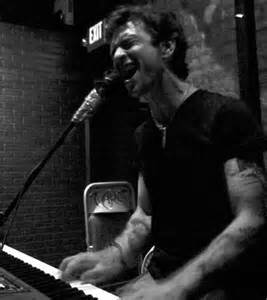
David Zollo behind his keyboard where he is most comfortable weaving his aural tapestry of Iowa life.

David Zollo dispensing his brand of heartland blues.

“We are today’s past-hippie generation, we’re anti-corporate and don’t want to sell out,” said Terry Cole, president of the Central Iowa Blues Society. “We’re not big self-promoters and I’m not sure we ever will be good at that.”

Despite hindrances, Iowa does have its own intrinsic strengths that have built the state’s brand of music and assist in its preservation. Artists like Greg Brown, Pieta Brown, Dave Moore, Joe Price, Bo Ramsey, William Elliott Whitmore, and David Zollo, to name a few, could relocate to Nashville, Chicago, Memphis, or Los Angeles to seek greater reward, but they don’t. Iowa’s rural dynamic works for them and keeps an audience hungry for their brand of entertainment.

“Music has changed a lot in Iowa since we began playing,” says guitarist Vicki Price, Joe Price’s musical partner and wife of 25 years. “Use to be everyone played country, country rock, or folk music. Now they’re mostly all blues players.”

On the Horizon

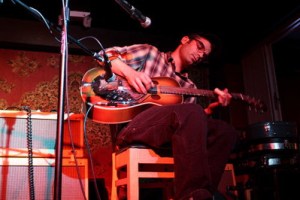
Dustin Busch hits the right chord at the Mill in Iowa City. | Photo by Julie Staub

Dustin Busch hits the right chord at the Mill in Iowa City. | Photo by Julie Staub

“You have a lot of good young players coming up like Dustin Busch and Matt Woods, along with a few of us crusty old guys still around,” says Joe Price, referring to players like fellow Iowa Blues Hall of Fame inductees Bob Dorr, Patrick Hazell, Catfish Keith and Bo Ramsey, R. L. Burnside’s family, and Kevin “B.F.” Burt.

One of the fresh characters on the horizon is William Elliott Whitmore. This 30-year-old singer-songwriter lives in a cabin converted from an old corncrib down on the banks of the Mississippi outside of Montrose in southeast Iowa. Here, lacking electricity or running water, Whitmore lives a simple life, stark and functional, like his music, surrounded by the land he loves.

Don’t alter my alter, don’t desecrate my shrine; My church is the water, and my home is underneath the shady pines; Don’t underestimate the spine in a poor man’s back; When it’s against the wall and his future’s black

One man’s story is another man’s shame; I ain’t bound for glory, I’m bound for flames; Take to the woods boy, and cover up your tracks; Go away child, go away child and don’t look back”

~ William Elliott Whitmore, from One Man’s Shame.

William Elliott Whitmore playing the Picador in Iowa City. | Photo by Julie Staub

William Elliott Whitmore playing the Picador in Iowa City. | Photo by Julie Staub

He represents the alternative wing of the heartland blues community. His roots are in punk rock, but after losing both his parents at an early age Whitmore listened to his rustic soul and embarked on a roots music career.

He learned about music by listening to his parents, who were both players, and by mining their record collection. This allowed him to gain exposure to the likes of Ray Charles, George Jones, Ralph Stanley and Hank Williams. These traditional influences have now combined with his passion for hardcore and punk music, creating a category-defying brand of alt-country blues.

“My roots are in country and blues, but I wanted to be in this punk band that played really fast and sang about political things, but it never felt quite right, so I decided to leave that up to the experts and I’d go back to what I know, and that’s playing roots music,” Whitmore said.

With a cast-iron voice that sounds more akin to a 60-year-old African American that’s been chain smoking Lucky Strikes and sipping corn whiskey his whole life, Whitmore delivers his tales of sin and redemption in frenetic fashion, like a whistling freight train barreling down the tracks.

Whitmore’s folk-punk authenticity resonates within the alienated culture of the hardcore scene, and with the traditionalists’ notion of an edgy folk singer. Often playing solo, with only his guitar or banjo to keep him company, his live shows are electrifying in their minimalism. Such performances have garnered him a devoted following of hipsters, punks, folkies, and blues loyalists alike.

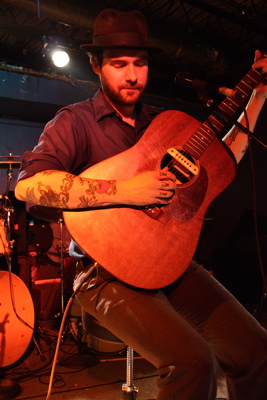
Whitmore and his banjo. | Photo by Julie Staub

Whitmore and his banjo. | Photo by Julie Staub

Back on the stage at Blues on Grand, Bob Pace continues to shred guitar licks. While he’s one of the premier guitar talents in Iowa, Pace is also one of the least well known.  But that may soon change. Pace and his Iowa Blues Hall of Fame partner Steve George, together performing as the Midnight Dogs, won the 2009 Iowa Blues Challenge in the solo/duo category.

The Midnight Dogs — along with the Avey Brothers, who were winners in the band category — will travel in January to Memphis to compete against acts from around the world in the International Blues Challenge. “It’s just plain cool and a validation — like a gauge of where I am as a musician,” says Pace about his win in the Iowa Blues Challenge. “We have a pretty healthy blues scene in Iowa. People from out of town are surprised by our quality of blues, but it’s everyone in the blues societies that keeps this alive — they’re here every night.”

Sidebar: Getting the Word Out 

Bluesman Kevin "B.F." Burt of Iowa City.

Bluesman Kevin “B.F.” Burt of Iowa City.

Helping bridge the spectrum of the state’s blues players are Iowa’s blues and folk societies. With a limited population that isn’t prone to nightly travel, Iowa depends on its blues societies to promote the numerous brands of blues-, folk-, and country-influenced players and keep the music alive.

The Mississippi Valley Blues Society, located in Davenport, has the largest following and is host of the annual Mississippi Blues Festival each July. It’s considered by many national blues publications to be among the top blues festivals in the country. In addition to hosting part of the Iowa Blues Challenge, the society also provides a very active “Blues in the Schools” program to help expose and educate children about the native art form of blues-related music.

In 1992 the Central Iowa Blues Society was founded by 200 dedicated blues enthusiasts who wanted to improve the blues scene in Des Moines. Its enrollment has swelled to over 800, with the society delivering news and information through The Blues Crier newsletter, sponsoring the winners of the Iowa Blues Challenge to compete in the Memphis International Blues Challenge, and hosting its winter and fall festivals. Members also work in conjunction with Jeff Wagner at Blues on Grand to run the Iowa Blues Hall of Fame.

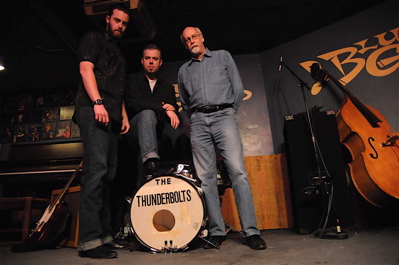
Matt Woods & The Thunderbolts from Des Moines.

Matt Woods & The Thunderbolts from Des Moines.

“Iowa has had three artists in the last six years make the finals at the International Blues Challenge, and in 2002 Blues on Grand received the Memphis Blues Foundation’s Keeping The Blues Alive award for the best blues club in the nation” says Terry Cole, president of the Central Iowa Blues Society. “The blues are strong in Iowa, but nobody really knows about it.”

The difference for many acts out in the central and western reaches of Iowa is that artists need to have day jobs because there aren’t enough gigs to make music a career. Here’s where the blues societies can help. The Lizard Creek Blues Society in Fort Dodge or the South Skunk Blues Society in Newton can set up gigs for artists in remote locations. Earlier this year the folk-oriented Brushy Creek Friends of Traditional Music set up a couple shows for Joe and Vicki Price at independent coffee shops in Fort Dodge and Carroll.

“We’re a point of communication for members, artists, and fans,” says Cole of the various support entities. “We’re all volunteers here and have full time jobs, but this is one big family, and we want to get the word out about the blues.”

#     #     #

Published by:  The Iowan | Vol. 58, No. 3, p. 38 | January/February 2010

* Indigo Rhythms: Iowa Blues Color the Heartland, won the Gold Award in the “Culture Feature” category at the 2011 International Regional Magazine Association (IRMA) Awards.

Posted in Liquor, Music, News, Reviews | Tagged , , , , , , , , , , | Leave a comment

Worth A Mill

Joe Price playing to a packed house at the Mill. | Photo by Julie Staub

Joe Price playing to a packed house at the Mill. | Photo by Julie Staub

Popping into the Mill for some happy hour relief is a familiar experience. Push through the battered wooden saloon doors and life slows appreciably. The cars outside continue to hustle up and down Burlington Street, but that has little bearing upon the glacial pace of activities for those inside.

The first pitch just let fly at Wrigley, and familiar faces occupy the well-worn stools around the bar, where pitchers of PBR remain under $4. Life is good and appears relatively unchanged at the Mill since its beginnings, yet below the veneer of this iconic Iowa City folk-blues club, its foundation is shifting.

Major cracks include both the city’s efforts to reduce the number of drinking establishments in the downtown area, and the fact that the Mill does not own the land on which it currently resides. Each issue, separately or combined, point to the possibility that this venerable Iowa City institution could be closed in the near future.

Opened in 1962 by Keith and Pat Dempster, this all-purpose tavern was intended to emphasize its home-cooked meals and chill environment, where people felt comfortable hanging out. Tucked away in a former auto dealership, the Mill is spacious enough to offer drinks, dining and billiards at the front bar, while live music can be enjoyed down the hallway in back.

It’s now one of those unique establishments that transcends its label of bar or restaurant, and has become a second home to many for going on 50 years.

“My friend Ed Bornstein, a former Iowa City musician, often described the Mill as the local “club house,” a place where musicians, writers and artists can convene and share ideas in a relaxed atmosphere, and I definitely agree with him,” said Andre Perry, booking agent and bartender at the Mill.

Make no mistake music is the star attraction here. Since opening, the Mill has established itself as one of the premiere folk-blues clubs in the Midwest. In addition to hosting national touring acts, all the local roots musicians pass through its swinging doors.

Artists like folk superhero Greg Brown and American songwriter Dave Moore, both frequent contributors to “A Prairie Home Companion,” along with guitarist/producer Bo Ramsey, slide guitar wizard Joe Price and boogie piano man David Zollo all have longstanding relationships with the Mill.

Iowa City’s folk-blues scene is solid, but dates to the early 1970s, and is aging. New blood has arisen from the scene’s forerunners, like Brown’s daughter Pieta and Ramsey’s son, Benson, who plays in the Minneapolis-based band The Pines.

Still, original owner Keith Dempster saw change coming in how the city council was dealing with downtown bar owners in an effort to curtail Iowa City’s drinking problem, and he elected to close the Mill in 2003.

Upon hearing of the Mill’s impending closure, local musician Marty Christensen stepped in to negotiate its purchase. Although the deal had already been arranged, it was kept quiet as Keith and Pat hosted a prolonged wake before the doors shut. The Mill reopened a month later, relatively unchanged physically, but with a modified business plan befitting the new ownership and changing business climate in Iowa City.

Christensen was raised in Iowa City and began playing music at the Mill in 1985. By day he’s a software guy, working at ACT for going on five years, but has tangents attaching him to all the major players in town, including Ramsey, Zollo, Brown, former Iowa City songwriter Kevin Gordon, and bluesman Dennis McMurrin.

Sometimes clothes become optional as things heat up on the dance floor.

Clothes become optional as things heat up on the dance floor. | Photo by Julie Staub

“I’ve played over 150 rooms, and this is one of the best…it’s a special place,” said Christensen. “The stage sound and atmosphere are so comfortable, that for a performer, you’re likely to have a good show.”

He found a partner in his brother-in-law, Dan Ouverson, who owns Short’s Burgers and Shine on Clinton Street. These two shared a history from their days at the Yacht Club, where Christensen played and Ouverson bartended and booked talent.

Yet even with their combined experience, the beginnings at the “new” Mill were a learning experience. Between staff quitting, regulars refusing to return and complaints from patrons about menu changes, the owners realized they needed to formulate a more defined direction for what would become their version of the Mill.

Under its previous ownership, Dempster kept the Mill’s comfortable confines centered on blues and folk traditions exclusively. The new owners want the relaxed atmosphere to carry on, while broadening the club’s appeal by catering to local talent – all local talent.

“I like one kind of music, good music, and that crosses many genres,” said Christensen.

Where the owners first elected to expand was into the alt-country and singer-songwriter markets. This brought in acts like the Drive-By Truckers, the Jayhawks and Des Moines-based Brother Trucker.

When original booking agent Trevor Lee Hopkins moved away, the decision was made to split his position between Andre Perry and Sam Locke-Ward. This only speeded Christensen’s concept to expand the Mill’s market.

Perry, 31, is a graduate of the Non-Fiction Writing Program at Iowa, and is a postdoctoral research fellow there. He also is one of the four founding members of the Mission Creek Music Festival, based out of Iowa City. Now in its fourth year, this event takes place over several days and utilizes multiple clubs in town to host live music.

The music sets the mood and then folks make the night their own.

The music gets the party started and folks run with the night spirits. | Photo by Julie Staub

Perry had already been booking acts into the Mill for Mission Creek, so it was a natural progression for him to slide into one of the available positions. Furthermore the philosophy of Mission Creek parallels his employers’ intentions: they like breaking stereotypes associated with particular clubs, and book atypical acts into them with the intention of bringing different fans to venues they might not ordinarily frequent.

“Sam and I have a lot of overlapping tastes and many different ones as well,” said Perry. “This opens up the range of acts we’re now bringing into the Mill.”

Together they’re responsible for getting Indie groups like the Decemberists, Arcade Fire and Okkervil River into the Mill.

But Perry and Locke-Ward are both hyper-conscious about attending to Iowa City’s local talent. They put emerging acts onto the stage at the Mill, pay them some money and make sure they get a good meal for playing.

“It’s important these kids get heard,” Perry said.

The lineup hasn’t changed considerably with the new ownership, especially on weekends, but the clientele has broadened considerably.

It helps that everybody on staff is either a musician or a huge fan. Locke-Ward has his band, Miracles of God; Perry plays keys in The Lonelyhearts; and Sam Knudson, who runs the soundboard for shows, fronts Shame Train.

“We understand service to the music community, the musicians and the public better than any other venue in Iowa City,” said Christensen. “It’s no good to be exclusive.”

The primary vehicle to showcase emerging talent is the Mill’s Tuesday Night Social Club. Perry set this up and Christensen lets him and Locke-Ward run it, allowing for anything from solo indie-guitarists to off-kilter electronic noise bands.

These are acts that never would have seen the stage when Dempster was running the place, but it does come with some tradeoffs.

“Sometimes there’s more graffiti in the bathrooms after these shows and that’s not OK,” said Christensen. “This isn’t going to be turned into some shit hole.”

Aside from this unfortunate detail, the new changes are paying huge dividends. Christensen reports their gross has nearly doubled in the first five years – although they still get complaints about taking the egg sandwich special off the menu.

The primary difficulty facing the new owners is that the Mill doesn’t own the property it resides upon. Developer Marc Moen is the landlord.

Christensen and Ouverson knew there was only a five-year lease when they made the purchase, and it has expired. Now it’s year-to-year.

The Moen Group owns the property from the Starbucks on Clinton Street, down to West Bank on Burlington, save a small parcel belonging to the city. Long-term possibilities for this land include the relocation of the university’s flood-prone art museum, but that’s slow moving until a decision is made on where to rebuild Hancher. Another possibility is constructing a glass and steel high-rise, with commercial entities on the bottom floors and residences above.

Guitarist Dustin Busch picks a mean mess of blues. | Photo by Julie Staub

Guitarist Dustin Busch picks a mean mess of blues. | Photo by Julie Staub

No decision is imminent, and Moen is adamant about preserving the Mill. “We love the Mill, it’s an institution and we want it to be here for a long time to come,” said Bobby Jett of The Moen Group. We’re working with the owners to ensure that.”

To lose such a treasured piece of Iowa City’s cultural landscape would be tragic enough, but darkening what is now the most diverse live music room in town could prove difficult to replace.

In the city’s ongoing effort to combat the college-related drinking problem in town, a new zoning ordinance was enacted by the city council in June, limiting new bars from opening within 500 feet of pre-existing liquor-related establishments. It’s possible this new ordinance would prohibit the Mill from reopening, due to its proximity to other bars already in existence.

“It’s hard to find something anywhere that has the character of the Mill, said Andre Perry. “You could build something new, but then…it’s new.”

#     #     #

Published by:  Little Village | Vol. 9, Issue 85, p. 14 | October 2009

Posted in Food, Liquor, Literature, Music, News | Tagged , , , , , , , , , , , | Leave a comment

Life After Death for William Elliott Whitmore

William Elliott Whitmore performing at the Picador in Iowa City. | Photo by Julie Staub

William Elliott Whitmore performing at the Picador in Iowa City. | Photo by Julie Staub

It only takes a brief visit with Iowa singer-songwriter, William Elliott Whitmore, to understand he’s one of those people just born old. Rustic and worn, like an aging barn that’s seen too many winters, this tattered soul perseveres by singing his demons away.

With a cast-iron voice and sparse accompaniment, often only his stomping foot and a rusting banjo, this farmer turned songwriter delivers autobiographical tales of sin and redemption in hopes of salvaging his own tattered life.

In support of his new record, Animals in the Dark, Whitmore, 30, has embarked on a world tour that makes a stop at the Rock Island Brewing Company this Friday at 10:00 p.m. He enjoys the success hard work has brought his way, and embraces the opportunity to expand his audience, but it’s home, on his Iowa farm, where he feels most comfortable.

Take a ride 90 miles south of Iowa City, down US 218, to Iowa’s SE corner, the last stop before entering Missouri or crossing the Mississippi River into Illinois. This is Lee County. Hang a left near Montrose and head out into the unincorporated territory, past any city or township, and into the woods – now you’re getting to where Will Whitmore lives, both physically and spiritually.

In the fertile crescent of Iowa, where the Des Moines River converges with the Mississippi, Whitmore maintains a simple life in a cabin converted from a corncrib built by his grandfather in 1954.

This old horse farm spans 160 acres, and is shared with other relatives, whose bordering properties insulate Whitmore’s farm on three sides.  His cabin doesn’t have any running water and only a wood stove for heat. It’s stark and functional, like his music, but poignant in its simplicity and limitations. The outhouse is around back.

“I’ve already told my manager I need the summer off so I can put in a bathroom,” Whitmore said. “I love my outhouse and don’t want the neighbors to think I’m putting on airs, but nature calls.”

A little farm menagerie keeps him company: some chickens, an old quarter horse named Jed, and a mule he calls 13. The horse and mule are “hay-burners,” too old for work, but amenable to listening to his new material.

“In my mind I like to think they enjoy hearing me play,” Whitmore said. “They’ll come over to my window and perk their ears up when I play something they like.”
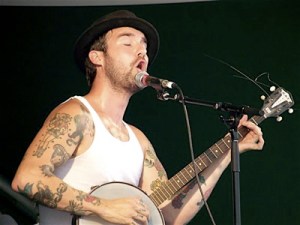
william-elliot-whitmoreWhitmore is the first to admit he isn’t the best picker, but he plays the hell out of the chords he needs. With his eyes closed so he can imagine himself back on his porch in Lee County, Whitmore delivers a frenetic live performance, like a whistling freight train barreling down the tracks.

Though rural at heart, Whitmore is well acquainted with the conveniences of city life. He’s traveled the world more than once, and his girlfriend lives in Iowa City, so he’s there often, but the farm remains his spiritual center.

Each season corresponds to one life cycle or another, whether it’s crops, wildlife or the pigs bred for slaughter. Life begs the question of death, but instead of the answer being intertwined with sadness, it signals a continuation from a natural sense of being. Everything has a purpose, death is just part of the process.

This spirit of renewal is something Whitmore illuminates in his music. Living this close to the land and working with animals gives him an involvement and proximity to these cyclical events that leave an indelible impression.

This creative process wouldn’t work for just anybody, but Whitmore was raised on this property, and he carries forward the elemental lifestyle his father embraced as a farmer.

Both his parents played instruments, and by listening to them and mining their record collection, Whitmore discovered the sounds of Ray Charles, George Jones, Ralph Stanley and Hank Williams. He combined these traditional influences with his passion for hardcore punk artists like Minor Threat, Bad Religion and The Pogues.

He knew music was what he wanted to pursue, but couldn’t get his head around how to make that happen. It seemed unattainable, like something visible on the horizon. It wasn’t until he started coming to Iowa City as a teenager that he discovered playing music could be much more low-fi.

“I got plugged into the music scene there, and these punk rockers were putting on basement shows – I had never seen anything like that before, I thought you had to have a fancy booking agent to play shows,” Whitmore said. “This was before I knew the term DIY (Do It Yourself), where people just put together shows wherever they could.”

This discovery was enough to spur him into getting started, but tragedy ended up being what delivered Whitmore his musical career.

At the age of 16, he lost his father to cancer. Three years later his mother was killed in a motorcycle accident.

These deaths left Whitmore shattered. He had no explanation or answer, he was adrift, and charted his emptiness to Iowa City, where he dove head first into the hardcore scene, swimming in a rage of intoxicants.

WEW 2“I had a period in my life where I thought maybe I’ll just kill myself with booze, maybe I’ll just drink myself to death and that way I’m digging my own grave,” Whitmore said.

The key to moving past the regret was to extricate the venom from his soul. Songwriting, it turned out, was the cure. Once Whitmore began writing about his demons and having conversations with loved ones passed, only then could he see a way out.

“I’ve definitely had a lot of loss in my life, like most people; I don’t know if I have any special case, but the only way I could deal with it was writing songs,” Whitmore said. “Some people paint pictures, some take photographs, but my way to deal with it was to write songs, and I really never looked back once this started to go down. It made me reprioritize my life in a major way, so now when I play on stage I think of all that, and relive those things. That’s what helps me do what I do, it’s a little bit painful but it’s the only thing I know what to do.“

He isn’t what you would call a religious guy, more like a pagan, but he has religion, and that is Iowa – its land, water, animals, his friends and family. He leaned on that and crafted a set of achingly dark tales exploring his transgressions, death and regret, and intertwined these concepts with the pastoral surroundings from his farm.

After becoming friends with local hardcore band Ten Grand, Whitmore thought he was going to be this punk rock guy. He tried starting up a band after playing in a couple garage outfits, but it just didn’t take. There was plenty of rage, but the suit didn’t fit – similar to when he was younger and attempted to emulate the crooning of Frank Sinatra and Dean Martin – it wasn’t punk music that was trying to get out of him.

“My roots are in country and blues, but I wanted to be in this punk band that played really fast and sang about political things, but it never felt quite right, so I decided to leave that to the experts and I’d go back to what I know, and that’s playing roots music,” Whitmore said.

His old soul took stock and moved in a different direction, channeling a voice reminiscent of a depression-era revivalist. The gravel in his baritone is accentuated by his prodigious consumption of cigarettes and whiskey, and serves to highlight the winding road he’s traveled.

“I try to have a timeless feel to the material that I write so that if someone listens to it in 50 years it will still apply to what is going on,” Whitmore said.

With both his demons and raspy growl in tow, Whitmore returned to his farm and over a 4-year period produced a trilogy of poignant albums on the Chicago-based Southern label: his debut release, Hymns for the Hopeless (2003), Ashes to Dust (2005) and Song of the Blackbird (2006).

To listen to any of these albums once, it would be easy to categorize them into some traditional blues, folk or alt-country listing, but doing so would neglect to account for Whitmore’s hardcore punk foundation. Guys like Woody Guthrie, Sonny Boy Williamson or George Jones wouldn’t have been caught mixing it up in a mosh pit or cutting their skateboards off park benches.
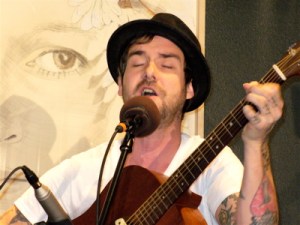
Whitmore playing the Java House in Iowa City.

Whitmore playing the Java House in Iowa City.

Whitmore embodies these conflicting styles both in song and appearance. He’s not an imposing figure, more trim, with sandy blond hair and a grizzled beard worn tight. Often dressed down, he’ll be sporting a pair of thrift store slacks, unassuming black boots, and a worn v-neck t-shirt. The look is made complete by his trademark hat – usually a dinged up fedora or porkpie, visibly fraying at the edges.

So styled like a troubadour, it’s his tattoos that remind us of his inner conflict. They run across his chest and down his arms. A radiant red heart with a dagger through it on his left forearm shows imposingly when he picks up an instrument.

It’s this intangible crossover quality, in both Whitmore’s persona and material, that allows him to continue gaining in popularity – a rare commodity in the music industry these days. As CD sales have slipped and the industry has failed to keep up with the online market, artists are hyper-compartmentalized and pre-packaged, in order to promote them and ensure purchase power from their perceived core-constituents.

Whitmore thus far has managed to sail above being definitively characterized. Even he is not sure exactly where he fits, but considerable credit should go to the visual nature of his songs, and the universal themes they touch upon.

On stage at the Picador. | Photo by Julie Staub

On stage at the Picador. | Photo by Julie Staub

At a recent sold-out appearance at the Picador in Iowa City, the scene was electric as Whitmore stormed to the stage. He brought with him Burlington, Iowa artist and musician, T. Wehrle to open the night’s festivities, followed by ft (The Shadow Government), which played a set and then sat in behind Whitmore, along with noted Iowa boogie-piano player and former High and Lonesome leader, David Zollo.

The place was packed before the show with scenesters, punks, hipsters, folkies and wannabes, most ripped out of their collective gourds. Typically this crowd of inebriants wouldn’t be found within a mile of a banjo, but his shows have become an event – an occasion for drink and song.

Whitmore’s folk-punk authenticity resonates within the alienated culture of the hardcore punk scene, and appeals to traditionalists as an alt-folk singer.

With good sour mash whiskey flowing strong everyone sings along when Whitmore shouts, “I’m going to raise my cup to the sky oh lord, I’m going to raise my cup to the sky.” The shots come blindingly fast to the stage from appreciative crowd members, ensuring Whitmore’s drinking cup never runs dry. With its participatory atmosphere a Whitmore show could be seen as a liquored up church with bar-side sacrament.

“I’ve had a long love affair with whiskey, I got started on that at a younger age than I should, but I come from a long line of frontiersmen that distilled their own liquor and it’s just in my blood, so whiskey seems the natural drink for us types,” Whitmore said.

Even with popular and critical acclaim building after each of his previous releases, Whitmore wonders how much he has left to say. He generally has regained control of his life. When not touring he’s happy on his farm, where his wants are few and once again he can enjoy a sunny day.

Yet even with the distance Whitmore’s residence provides from the hectic realities of modern life, the wickedness of our current times found a way inside. The country’s polarized political climate, combined with incidences of police brutality and the war angered Whitmore, who happens to be an avid NPR listener.

Well it’s a goddamn shame what’s going down; How we got to this I do not know; There’s a sick sick wind that is blowing ‘round; And the captain’s got to go ~ sings Whitmore on Mutiny.

WEWFrom this opening verse on Whitmore’s new release, Animals in the Dark, he declares war on corrupt politicians in power that would try to control people from behind closed doors. Set only to a martial drumbeat, Mutiny signals a departure for Whitmore from his inward examination of personal demons and instead unleashes his rage upon those charlatans, crooked cops, and supposed leaders that would abuse their power and harm the state of the union.

“The impetus for me was this past administration that declared war all over the world without any compassion for human life, and raped the land and pillaged the people without any regard for anything beautiful or logical,” said Whitmore.

This CD is Whitmore’s debut release on ANTI– Records, a label known for signing older outlaw artists. It’s home to such luminaries as Tom Waits, Ramblin’ Jack Elliot, Merle Haggard, Billy Bragg and Nick Cave. Though considerably younger than most of his label-mates, he fits because of his voice and dark subject matter.

“There’s a story arc that goes with the record, that has to do with a man, who declares a call to arms, goes to jail, gets out, finds a new lease on life and decides he has lived a good life, and the way that he can reconcile good versus evil is to create some beauty,” said Whitmore. “By the end of it he has to die, but he gets to die with his boots on.”

His songwriting is solid, and there’s an added texture to his musical arrangements, including electric guitar, accordion, layers of organ, pedal steel and cello. ANTI– is a big step up from the Southern label, and Whitmore recognizes the big sticks they swing over there, but his continued sonic experimentation is a telling sign that we have yet to see Will’s best material.

“When these ideas started coming along I knew I had to speak my mind,” Whitmore said. “An artist, whether you’re a writer, a magician or a musician, needs to be challenged, so that is what I tried to do, and I looked up to some of my heroes, Boots Riley from The Coup, Chuck D from Public Enemy, Bob Dylan, Billy Bragg, Shane MacGowan from the Pogues, these people, that in a poetic way, have expressed their discontent,” Whitmore said.

WEW 3The title Animals in the Dark is partly metaphorical, and goes back to the serpent demon in Whitmore’s dreams. This is distilled onto the cover art, as painted by his friend, Lettie Jane Rennekamp. In part it’s a reference to all the nefarious powerbrokers out there, but it’s also quite literal in regard to the creatures Whitmore encounters on his farm.

“At night I like to establish a rapport with the various animals in the woods where I reside, from the raccoons and the deer, to the coyotes and owls, and I like to have conversations with them at night and get them howling and screeching,” Whitmore said.

Like the material on this record, he wanted the cover art to reflect a departure from the style on his previous three offerings, which his cousin, Luke Tweedy designed. By having Rennekamp do the artwork it furthered Whitmore’s desire to maintain an Iowa solidarity, and involve family and friends in his music as a means of keeping the project close to the heart.

Tweedy, who plays in ft (The Shadow Government), handled the production duties on Animals in the Dark at his Flat Black Studios, which he and Whitmore finished constructing earlier this year in Tweedy’s Iowa City garage.

Thus far Whitmore has managed to construct his career from his home base in Iowa, which is a model several of his famous friends, like Greg Brown, Bo Ramsey and Dave Zollo, have shown him by example. He’s toured previously with the Pogues, Lucero, Clutch and Murder By Death, and learned the trade from people who’ve been at this game far longer than he has. The man has served his time, and with solid DIY credentials this fire branded original is determined to persevere.

“Honestly I love life, I can get it all out through my music, if I didn’t have that I would have ‘off-ed’ myself a long time ago,” Whitmore said. “This musical outlet has saved my life, I know it’s trite, but it’s definitely saved my life, so during the day I’m a happy guy, I can laugh, just because I can vent at night. It’s taken me a lot of years to reconcile it all, but I feel good about the world.”

Posted in Liquor, Music, Reviews | Tagged , , , , , , , , , , | Leave a comment

David Zollo: Musician for Hire

Musician David Zollo | Photo by Sandy Dyas

Iowa City – It’s two hours before showtime. The band is just setting up. The sound system could use help; the crackle of distortion pierces the relative silence inside the Mill as the buzzing wait staff preps the back bar of this longtime Iowa City folk-blues club.

Tonight’s performance is sold out.

On stage, David Zollo unwinds behind his keyboard. With a cigarette dangling from his lips, he takes his piano for a test drive and sings a few lyrics. But the feedback persists. While sipping from his glass of Maker’s Mark bourbon, he reaches under the keyboard to fiddle with the amp jack – a little electrical tape and all’s good.

This is routine for Zollo. Whether playing solo or, like this night, with his band the Body Electric, he plugs in more than 200 nights a year. After 18 years as a working musician, dilapidated sound systems are just part of the scene.

“I’m fortunate in that I have a real equanimity to how I look at these gigs,” Zollo said. “Certainly some are better than others, but I love the work and usually can find something edifying at any show.”

Zollo continues on a career path that is getting harder to follow in an age where CD sales are plummeting and digital downloads are becoming the norm. Yet touring, or “gigging,” remains the great equalizer for megastars and emerging talent alike. Artists with the ability to play live, who are willing to make the sacrifices necessary to stay out on the road can recoup lost revenue from music sales, sell a few CDs from the stage and maintain careers as professional musicians.

That adds up to about 50,000 miles annually for Zollo.

“I love to travel and meet people, so the road isn’t that hard for me. My trouble, as recently evidenced, has been substances,” Zollo said.

There always is temptation waiting at each stop on the road.

For the Piano Man, temptation is always waiting at each stop on the road.

It’s not that drugs suddenly became an issue for Zollo. They’ve been present since the start of his career, but success, a crazy schedule and endless touring can hide a lot from a person’s family, until the problem becomes unmistakable.

Zollo’s addiction reached that point in February 2008. Prior to a show in Dubuque, police arrested him on a warrant from Iowa City, charging him with a variety of narcotics-related offenses, stemming from his attempted purchase of heroin from an undercover police officer.

This incident was compounded when a few weeks later Zollo fell asleep at the wheel while returning from an early morning radio show in Decorah and  swerved off the road, crossing both lanes of traffic before crashing into a ditch on the opposite side of the road.

Amazingly no one was injured, but it did give Zollo a moment of clarity to recognize he needed help.

He went down to Nashville for 30 days of residential treatment at Cumberland Heights, a center for chemical dependency that caters to musicians. He got cleaned up, cut a plea deal on the criminal charges, then dusted himself off and went back to playing music.

“People fill that time, that hole, with different things,” Zollo said. “Some with women, some with booze, some with gambling. For me, dope was the thing.”

At 39, the road miles are visible on his face. The life of a working musician doesn’t come with sick leave or matching 401k; play or starve, there’s no in between.

As the show at the Mill is about to begin, Zollo slips off his shoes, preferring the natural feel of playing barefoot. He interlocks his hands and first stretches his arms out in front of his chest, palms outward until his knuckles crack. Then he stretches his hands over and behind his head to limber up his shoulders.

The left leg gets moving, pounding the stage as he counts off time before easing into the first song, “For Hire:”

“When it all came down caught me unaware, I started picking up on all the 1,000 yard stares, sent out to me by the stiffs and the squares on the wire.

Well I looked to the right but my friends was gone, don’t know what I done but it must have been wrong, now all I got left are these silly little songs and I’m for hire, well I’m for hire.”

Zollo behind his keyboard like on so many a night, leading his band the Body Electric.

Zollo behind his keyboard leading his band the Body Electric. | Photo by Julie Staub

It’s during shows when Zollo can actually relax, and unwind through his own boogie-woogie style of piano playing.

His shoulder-length brown hair falls into his sleepy eyes, but nothing can conceal the easy smile he shoots the guitar player once the band gets cooking. Let the therapy begin.

Zollo began playing the piano at 3. He attended the Preucil School of Music in Iowa City, one of five institutions in the United States that teaches the Suzuki Method, emphasizing memorization and ear training.

Music was in his blood, coming from his grandfather, Payson Re, who led the orchestra at New York’s famed Stork Club from the 1930s to the ’50s.

By Zollo’s early teens he was entertaining gatherings at his parents’ house with spot-on covers of Ray Charles and New Orleans legend Huey “Piano” Smith.

College briefly interrupted Zollo’s musical progression, but in 1991, during his senior year at the University of Iowa, family friend and Iowa blues piano legend Patrick Hazell overheard him playing in his father’s home office and declared him ready for the stage.

That was the end of college for Zollo. Hazell arranged a spot for him in a benefit show at the Deadwood in Iowa City, and Zollo dropped out cold turkey, 14 hours shy of a degree, without regret.

Within six months, David, now 22, joined four other musicians – guitarist Ruairi Fennessey, Darren Matthews on slide, bassist Dustin Conner and percussionist Brad Engeldinger – to form High and Lonesome, an uptempo Southern-styled rock band, fused with an alt-country twist, that played original tunes.

The boys toured the United States and Europe for two years, selling out venues of 800 people, often walking away with $4,000 a night. Zollo handled the business end of things. There was a band fund that took care of travel expenses and insurance; the rest was an even split, with a considerable sum going to recreational chemicals.

“Everybody said ‘yes’ to something, just depended on what their general interest of choice was” said Zollo.

On any given night High and Lonesome could be the best or the worst band you ever heard, depended on the quintet’s sobriety.

Zollo came off the road in 1994 to record his first solo disc, “The Morning is a Long Way From Home.” Bo Ramsey, a noted guitarist and producer from Iowa, who has collaborated with folk icon Greg Brown, Ani DiFranco and alt-country hero Lucinda Williams, took an interest in High and Lonesome and wanted to work with Zollo.

What began as an exciting opportunity took a dark turn when Zollo’s voice began to weaken during recording. His condition deteriorated over two weeks until his voice disappeared. Tests revealed tumors on his vocal cords – not yet cancerous but on the verge. Surgery was the only option, but with the distinct possibility that Zollo might lose his voice forever.

The successful procedure at the University of Iowa Hospitals lasted five hours. Luckily Zollo had retained health coverage under his parents’ policy, but this only lasted for a couple of months before he was dropped upon reaching his 24th birthday. Then the bills came.

While recovering he took up residence in a trailer on Greg Brown’s property, south of downtown Iowa City. The prospect of being unable to sing proved a heavy burden and left Zollo to confront mortal frailty and the bitter hole-card life had dealt him. Vulnerability and the warmth of denial led to more serious substance abuse.

Perspective can get blurry out on the road.

Perspective can get blurry out on the road. | Photo by Julie Staub

As if a scene from the Stones’ song “Dead Flowers” had come to life, Zollo retreated to heroin. He knew the warnings from Lynyrd Skynyrd’s Ronnie Van Zant about messing with the needle and the spoon, but that trip to the moon was intoxicating.

“Self-medicating is what was going on, no question,” Zollo said. “I was going through physical pain at first, but it was more psychic pain – the death of hubris.”

Cocaine, weed, pills and alcohol were co-conspirators.

It took two months for David to work through the turmoil and recover sufficiently before attempting to sing. He released his solo disc with the broken vocals to critical acclaim.

In the interest of trying to fight some demons and rehabilitate his voice, which would take five years, Dave hooked back up with High and Lonesome and hit the road for the next year, contrary to his doctor’s wishes.

About that time he met his future wife, Beth Oxler. Having recently returned to Iowa City from studying in France, this willowy brunette had become the fancy of Zollo’s eye.

She wasn’t part of the Iowa music scene and represented a life beyond the phenomenon of High and Lonesome where Zollo could find sanctuary. Oxler worked at ACT and also as a designer for local alternative monthly magazine Little Village.

Zollo and Oxler married in 1998 but have since separated. Their 6-year-old boy, Rocco, already rates as a talented drummer and AC/DC fanatic.

Since that first gig at the Deadwood in 1991, Zollo estimates he’s played more than 3,000 shows. He tends to stay within a five-state radius so that everything is drivable, and he’s usually able to secure a guarantee of $300 to $400 for a solo show and $500 to $600 with the Body Electric. Or he can take a cut of the door on bigger shows.

“I can’t complain. I’m making a living doing something I enjoy immensely, and I feel like it’s what I’m best at,” Zollo said.

Zollo continues to persevere through the disappointments, in particular seeing the record label he founded in 1994, Trailer Records, dissolve in debt.

Started in 1994, Trailer Records established international credibility for its solid stable of artists, including Greg Brown and Bo Ramsey.

Disagreement remains between these three friends over how it all went south, but between taking on too many artists and advancing funds for releases that were never recouped, the label took on lethal debt, and Trailer had to be shut down in 2005.

“I prefer to look at it like Trailer had a good run, and the work speaks for itself,” Zollo said. “I’m much more interested in the fact that I’m making work now that says something to me.”

A drink and a song my friends...

In Dubuque, Zollo shares a drink and a song with friends.

Relative sobriety has given Zollo a renewed vitality, and he’s focused on the completion of his latest album, the first since 2002’s “Big Night.” The new batch of songs taps into the darkness of his addiction and examines some of the lessons he’s learned the hard way – and some he’s continuing to learn.

“I’m a poor Dago child of hippie parents,” he said. “I don’t put much stock into conventional ideas or societal propriety or I wouldn’t be doing what I do. I’d rather live an interesting life full of joy, passion and some heartache, than a life I’m not connected to.”

Playing gigs in barrooms such as the Mill in Iowa City remains his best therapy. It’s on stage where Dave finds true bliss. No bills are due, the cell phone doesn’t ring and there’s no e-mail to answer.

“I get lost in the moment of playing live,” said Zollo. “I have no ownership over that moment. It’s a shared thing, communal, between me and the audience.”

#     #     #

Published by: The Des Moines Register | 07-13-09

Posted in Liquor, Music | Tagged , , , , , , , , | Leave a comment

Feelin’ Blues

Joe Price surveying the sold-out crowd at the Mill in Iowa City.

Joe Price surveying the sold-out crowd at the Mill in Iowa City. | Photo by Julie Staub

Driving to Fort Dodge is not what I had in mind on Wednesday, but when Vicki Price e-mailed saying she and her husband, blues guitar slinger Joe Price would be happy to take time out of their busy touring schedule to chat, how could I resist?

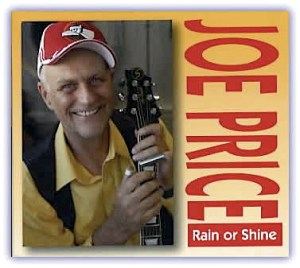
I only met this Iowa Blues and Rock ‘N’ Roll Hall of Fame inductee this past February, after reviewing his latest CD, Rain or Shine. He invited me to their show at the Mill, where the energy was palpable before the first chord, and once Price set to ripping his gutbucket brand of Delta blues, the entire joint got to sippin’ and shakin’.

This is what it’s all about for Price. It could be a club in San Francisco or a coffee shop in Dubuque, doesn’t matter, he just loves to get that guitar singing and see folks up having a good time. His performance at the Mill stuck with me, and I was hankering for another dose of Joe’s heartland blues.

Fort Dodge is three hours northwest of Iowa City, out into farm country. Traveling on US-20 west, the road is dead straight for 98 miles, with nothing but pastures and crop fields as far as the eye can see.

At Bloomer’s on Central, an intimate coffee shop in downtown Fort Dodge, the Brushy Creek Friends of Traditional Music were hosting, “Blues, blues and more blues!”

The place was standing room only, filled with a mixture of retro college students and aging boomers. These are Joe’s people. He’s been bringing solid blues music to city dwellers, Iowa farmers and small town locals alike for over 35 years.

Price is a picker and slide guitar man extraordinaire. Captivated by electrified country blues, he bends a mind numbing set of notes, and gets his boots slapping off the stage to create a tremendous display of sound, especially for a soloist.

Like many blues traditionalists, Joe favors National Resophonic guitars. These steel babies were originally designed for jazz and Hawaiian music, but became popular with blues players because the resonator and steel body is several times louder than wood body guitars. National gave Price one as a gift for his dedication to classic blues traditions.

“Joe really loves the Delta blues and National is the guitar of choice,” Vicki Price said. “His favorite is a 1930’s-era National named “Grandma”, which he doesn’t take on the road anymore.”

Joe Price gets his boogie feet moving. | Photo by Julie Staub

Price gets his feet moving. | Photo by Julie Staub

The other staple of a Joe Price performance is his unique style of footwork or foot slapping. It not only increases his aural presence, but seeing him seated, wailing on a guitar with both feet going is a visual delight.

Price, 57, got his start coming out of a musical household in Waterloo. His grandparents played the trumpet and ukulele, and his mom had been a flapper in the bathtub gin days of the 1920s.

“She’d sing these weird little tunes to me, shake her finger, and do this little dance, it was great,” said Price.

Waterloo isn’t exactly the blues metropolis of the world but Price recalls a railroad strike being responsible for Southern blacks migrating to the area for work. As a result an African American record store opened in town, where his mom, who was a music collector, bought a considerable number of hard to find releases.

“Me and my brother Butch would listen to these jazz and blues records my mom collected back in 1935, that’s where it all came from,” said Price about his musical lineage.

He also had the opportunity to meet Earl Hooker, one of the greatest slide guitar players to ever live. Hooker, whose cousin was John Lee Hooker, moved to Waterloo for a time and Price would catch him gigging in music stores.

Once he saw the slide there was no going back.

“Earl showed me how open tuning went and told me to get a bike handlebar to use for a slide,” Price said. “So I ran over to my neighbor’s house and pulled the plastic thing off the handle and sawed the metal end off.”

He’s been twanging ever since.

Price moved to Iowa City in 1971, and two years later formed the Rocket 88’s, with Ray “Willie” Wohlert and “Blue” Phil Ajioka. This turned out to be an important collaboration for Price, as it was his conduit into the influential MotherBlues Band, and how he met Vicki.

Coming up around the same time was Burlington native Bo Ramsey, a gifted guitarist and producer. After sitting in with the 88’s one evening, Ramsey joined up and introduced the band to Patrick Hazell, who had already started MotherBlues.

This was a loose confederacy, with different guys playing in the band nightly. Hazell, Ramsey and Price decided to form a tighter affiliation and kept the MotherBlues name, since it already had cache in the region. They became infamous for their hard-nosed electric blues style, and shared the stage with acts such as Led Zeppelin, Jefferson Airplane, Willie Dixon and Muddy Waters.

One evening in 1982, when Joe was on a break from MotherBlues, he had a show at the Gin Mill in Waukon and Vicki was bartending. The crowd kept asking to let her have a go at playing and he relented during his set break.

IMG_4522

Joe & Vicki Price | Photo by Julie Staub

This year the couple will celebrate their 25th wedding anniversary. Much of their time together has been spent on the road, logging between 40,000 and 50,000 miles a year. Joe always had a rep for sleeping in his truck, often out of necessity from knocking back too much wine. The Prices customized their current van, to add a raised deck bed in the back so their equipment can slide underneath for easy loading and unloading. They reside in Lansing, Iowa, but are away playing around 150 dates yearly.

Joe’s definition of the blues remains strict. “We’ve been listening to Mississippi John Hurt the last two days, Son House before that, and Django Reinhardt a lot,” Vicki said. “He goes through phases, B.B. King is something he still listens to, but not Buddy Guy, he’s too rock now.”

This narrow interpretation, Price sites his Muddy Waters and Elmore James as his primary influences, carries over to the vintage sound he wishes to convey. It works best playing through tube amps, which have a warmer sound and can achieve the desired roar at a lower volume than digital amps.

These are difficult to find and expensive to maintain, so the Prices have their amps custom made by Kevin Dohse, of Soldier’s Grove, Wis. “The ones we tour with are equivalent to a 1956 Fender Twin,” Joe said.

The Prices also seek this attention to detail in the studio, electing to record at Wow and Flutter in Nashville, where vintage microphones, amps and 2-inch reel-to-reel tape are available. One aspect of new technology they embrace is the World Wide Web. “The Internet has been wonderful,” says Vicki. “Before it was nearly impossible to get a gig in California, now you just look up a club and show them your MySpace page.”

Joe and Vicki Price at Bloomer's on Central.

Joe and Vicki Price getting their groove on.

The next tour stop was in Carroll, at Perk Central the following night, about an hour southwest of Fort Dodge. Midway through the show Joe is rocking back and forth in his chair and has those crazy feet going on “Beer Tent Boogie Woogie.”

After a couple more songs he removes his trademark ball cap, this one black with “Blues Power” stitched in red across the front, and wipes the perspiration from his brow. He has a drawn, grizzled appearance, with grey stubble on his head and face, but sharp eyes and a smile that lights up a room.

Price adjusts the brass finger picks on his right hand, and grabs “Nellie Bell,” the National steel guitar he tours with, and lights into “Hornet’s Nest,” appearing almost unconscious inside the groove. The licks just keep coming in waves and the crowd shows their appreciation.

“Everybody’s here but the cops and they’ll be here any minute,” says Price in winking appreciation to the loud audience.

This is how it goes for the husband and wife team night in and night out. Joe plays the first set solo, starts the second, invites Vicki up to play some of her tunes, then they play out the set together. Meanwhile a tip jar makes the rounds.

After the final number, we trotted over to a club around the corner from the coffee shop for drinks, but Joe and Vicki couldn’t stay long. It’s Thursday night, and the couple plays La Crosse, Wis., tomorrow. They want to make Ames before bedding down for the night in their van.

(Joe and Vicki will be making two Iowa City appearances on June 13th. First in the morning at Market Music, from 9:00 to 11:00, then at George’s, from 9:00 p.m. till 1:00 a.m. Come see why folk-legend Greg Brown has long referred to Joe as “the Buddha.”)

#     #     #

Published by:  Little Village | Vol. 9, Issue 81, p. 20 | June 2009

Posted in Music, Travel | Tagged , , , , , , , , , | Leave a comment

Where Every Day is Bloom’s Day

Patrick BloomCapitalizing on the convenience and speed of the Internet, musician and producer Patrick Bloom manages his cooperative music label from his kitchen, usually in the middle of the night.

Iowa City – Patrick Bloom puts a new spin on working from home. After he folds the laundry and puts his daughter to bed, he turns his full attention to the business of running Mud Dauber Records.

Coordinated from Bloom’s cluttered kitchen table, where a shiny Apple laptop competes for space with a vase of roses and the day’s mail, the cooperative music label was launched in 2007, with the goal of bringing together artists trying to accomplish the same goal, in the same musical genre, under one roof. By splitting costs among artists, borrowing musical talent, and utilizing the power of the Internet, Bloom offers a blueprint to minimize artists’ expenditures, maximize profit and increase exposure.

“Mud Dauber is a collection of artists working in collaboration to the mutual success of everyone involved,” said Bloom, the 39-year old founder.

This Internet-based experimental label, named after a vindictive wasp, is home to four American roots acts. The musical styles range from Bloom’s jangly, folk-pop to the old-time bluegrass of The Gilded Bats to the rollicking, jam band picking of The Mayflies and the Southern-blues soloist BeJae Fleming.

The idea started when Bloom realized Iowa City’s vibrant roots-music community was being undermined because artists were operating independently, expending valuable resources. While mastering The Gilded Bats’ self-titled album in 2007, he felt energized by the group’s raucous sound and wanted to help spread their music. After a dinner conversation with fellow musician Bejae Fleming, Bloom realized the potential of beginning a label. He pitched the co-op idea to the band and they were interested, so Bloom pushed the foundations together for an actual organization.

First he asked his wife, Nancy Lincoln, if the commitment of starting a record label would work into the mix with raising their 4-year old daughter, Tula.  But Lincoln, an accomplished painter and mixed-media artist, shares Bloom’s desire for artistic expression.

“If you consider a day like a pie chart of time, we do a beautiful job of waxing and waning – not so much juggling, as sharing and being present in each other’s passions as a painter and a musician,” said Lincoln.

As the previous owner of the Petting Zoo recording studio in Iowa City, Bloom had the expertise to bring the business model for Mud Dauber in place within a week and a half. He purchased the label’s domain name, mapped out the Mud Dauber Web site, secured server space, and began drafting the label’s wasp-inspired logo.

The Gilded Bats realized the benefits of following the Mud Dauber model of limiting upfront costs and maximizing exposure right away.

“We were looking at five years before breaking even after putting out our first CD,” said The Bats’ fiddler Norbert Sarsfield. “It ended up only taking about a year, and that wouldn’t have happened without the Mud Dauber presence.”

Bloom, and several of his label-mates work day jobs to pay the bills. For Bloom this means serving as a full-time purchasing manager at New Pioneer Co-op.  It makes for long days but allows him the financial freedom necessary to create his music and continue propelling the Mud Dauber name.

“It’s Mud Dauber’s job to support the process these artists have already begun and create a glue that will hold numerous bands together through the same process,” said Bloom.

The label provides each artist a page on Mud Dauber’s website that lists bio information, tour schedules, links to additional artists’ webpages, like MySpace, and offers electronic press kits – all at no charge. This leaves recording fees and promotional costs to the individual artists’ discretion.

“If you run small you can do this forever, but if you pump too much money into the start-up, it can bankrupt you,” said Bloom.  “Mud Dauber isn’t in position to make money so it isn’t in position to lose money either.”

Distribution is handled through CD Baby, an online independent record store in Portland, Ore., which digitizes the music and offers streaming media and downloads through iTunes, Rhapsody or Napster.

As a business entity, this may not sound like a particularly profitable endeavor, and at the moment it’s not.  There isn’t a traditional revenue stream, but that is by design. Any money realized for the label is generated by transaction fees for downloads or online purchases.

“I suppose David Geffen would laugh at me,” said Bloom.

At 7 cents earned per downloaded song, the label rakes in around $20 per year, but this is enough to pay for the yearly fee associated with owning the label’s domain name.  Bloom did all the online design himself, and aside from paying a nominal amount for hosting fees, Mud Dauber Records is static – it pays for itself.  The only intangible is how much time Bloom invests into the label.

“I’m up at 6:00 a.m., and if the label has a release coming out I’ll send e-mails till after midnight,” he said.

The label has thus far had two official releases, The Gilded Bats’ self-titled disc and Bloom’s March 2008 offering, Moses.

He is finishing up a new CD, Ghosts of Radio, named after his backing band, scheduled for an April release. This multi-talented musician is a storyteller at heart, in the vein of Iowa’s own Greg Brown, and that remains evident in his upcoming release.

While the new recording has a more loose and upbeat style than his previous offerings, Bloom continues to scrutinize the humanness of people and what drives them.

“It’s melodic in a way, like Paul Simon, but darkness is there time and again,” said Lincoln. “It’s like getting punched in the face by Paul Simon,” responded Bloom.

This release revisits a formula successful to Bloom for him on his Moses recording. In addition to employing the low cost principles his label espouses, he applied for and received a $7,800 grant from the Iowa Arts Council. The council, which awards major grants of up to $10,000, receives about 80 applications a year but only gives grants to about 25 percent of them.

“I’m unbelievably grateful to the arts council,” he said.  “I couldn’t do what I do without it.”

The cost for producing a new release can run to more than $15,000. The grant money will help Bloom to promote his CD, which will move units and get his music heard by a wider audience.

The Mayflies also are putting the finishing touches on their latest release, A Thousand Small Things. The CD is the band’s fourth but first on Mud Dauber, and band members are looking forward to putting the label’s philosophy to work.

“Mud Dauber is appealing because it’s an independent label and nobody’s out to take anything from us,” said Stacey Webster, a singer and guitarist for The Mayflies. “We combine our resources to lift each other above what could be done alone.”

Bloom remains most interested in capturing the benefits a solid roster of musicians will bring: a family atmosphere, mutual support among artists and a reputation in the folk-roots community.  If that goal can be realized, financial success might not be far behind for the Mud Dauber family.

“The potential is pretty cool, and it all revolves around artists remaining completely independent and still working together,” said Bloom.

#     #     #

Published by:  Off Deadline | Volume 1, Issue 2, p. 16 | Spring 2009

Posted in Music, Reviews | Tagged , , , , , | Leave a comment

The Creek is Rising – Mission Creek:Midwest Turns 4

Baltimore's Beach House brings its atmospheric sounds to the Picador on Thursday night.

Baltimore’s Beach House brings its atmospheric sounds to the Picador on Thursday night of Mission Creek.

Iowa City – Bartender here is my $50 – hook me up with a festival pass and a pint of Fat Tire. That statement is one organizers of the Mission Creek Music Festival anticipate hearing often over the next two months. Marking its fourth year, this multi-day, multi-venue event runs April 1 – 5.

Modeled after the successful Mission Creek Music & Arts Festival in San Francisco, Mission Creek: Midwest has blown through its original design and struck out on its own to make a reputation in Iowa City.

One of the Midwest’s producers, Andre Perry, previously lived in San Francisco and worked on the original Mission Creek festival with its founder Jeff Ray. After moving here to enroll in the University of Iowa’s creative nonfiction writing program, Perry and fellow founder, Tanner Illingworth, came up with the idea to put together this Midwest version of Mission Creek.

“We had heard about Iowa City,” said Perry. “Gabe’s was one of those venues that I knew about before moving here, and the writing community is renowned across the country, so we just figured that something like Mission Creek could happen here.”

The basic philosophy remains the same behind these two events. Organizers seek to pair smaller independent bands with a handful of notable headliners in order to showcase a variety of music.

“The idea is to expose local and regional talent to a larger audience and to match them up with national acts that might share some of the same interests,” said Illingworth.

The difference between these two being that San Francisco has many more established acts to choose from locally, making it easier to draw crowds. There are far fewer bands and performers here, so to pull off a similar festival in Iowa City requires booking a greater mix of acts to try and pique public interest.

This is no small feat. The festival’s producers, Craig Eley, 27, Illingworth, 24, Todd Olmstead, 25, and Perry, 31, aimed to have everyone booked by October, but it’s hard to nail everything down. Considerations had to be given to the relationships between acts and venues and who play against each another.

Some shows can be booked in a couple weeks, but others, like The Mountain Goats, are four years in the making.

Dividends are already appearing by Mission Creek bringing in acts to Iowa City that would not come here normally. There is no medium-sized club in town where national touring acts can play on a regular basis. The Iowa Memorial Union can put on shows of this level, but they are alcohol free, and that just won’t do. Mission Creek offers the chance to see a sweet band in a tiny venue.

“A band like Beach House or The Mountain Goats, at this point in their careers, are going to bypass the state of Iowa,” said Olmstead. “We use what we have here to get someone to play a smaller venue than they might otherwise.”

This is made possible through a little arm twisting on the part of Mission Creek’s organizers and doing a good job of selling the Iowa City community.

“Bookers recognize this is a special event and if their client is going to ever appear in Iowa this is the chance to do it,” said Perry. “We’re not Cochella and we can’t pay them Cochella dollars but this is still a cool and artistically worthy place for them to play,” added Olmstead.

Organizers are also consciously attempting to break down stereotypes associated with the live music venues in this college town. Over at the Picador there’s an alternative and metal crowd, while the Yacht Club is known for its get-high jam band scene, and the Mill is heavily folk-influenced.

Often it proves difficult for one venue to attract crowds from another, even if the entertainment is comparable. Mission Creek wants to turn this on its head and unify the different scenes as much as possible, so no matter where a person stops to take in some of the festival there will be something of interest.

One thing we’ve done successfully is take a lot of bands out of their atmosphere and put them into a different venue, in front of a different crowd,” said Pittsburgh native Craig Eley. “We’ll throw a big, crazy indie-rock show at the Yacht Club because it just doesn’t happen very often.”

While music is the driving force behind Mission Creek, a strong second is Iowa City itself. Organizers point out that in addition to the literary and indie-rock scenes here, there are a variety of subsets beyond the obvious, such as the underground music and noise scenes or spoken word. Mission Creek’s objective is to shine a spotlight on all these different happenings in town so people can identify them and get involved.

“That’s the other thing about the festival, its really about Iowa City,” said Eley. “It’s in downtown venues, it supports the downtown economy, but more than that, we all live here and love this place and if we can get one or two national news stories because of this festival it promotes Iowa City as well.”

Something the Mission Creek folks are noticing this year is the attention they are getting from people in the community. Organizers went out of their way in reaching out to the city and local businesses and they have been rewarded for their efforts.

For the first time the city council and City of Iowa City are backing the festival. Mission Creek is also partnering with Summer of the Arts on the festival’s literary component, and an agreement was reached with the university to host some events on campus.

“I support innovative ideas for the arts and the Mission Creek guys are innovative,” said City Councilwoman and Mission Creek contributor Connie Champion.

The festival is always on the edge financially, but it continues to run in the black, if barely. Mission Creek is set up as a non-profit organization, something local attorney Paul Burns, from the law firm of Bradley & Riley, assists organizers with pro bono.

“We try to pay people as much as we can, as a rule,” said Perry. “Sometimes people do favors for us because they know we’ve got some financial stress and they will take down their rates so we can pull it off.”

“Everyone gets paid except us,” said Olmstead.

The first two years the festival was only as big as its founders’ bank accounts. But there has been steady growth annually, from 1,200 attendees the first year, to 3,500 in 2008. This year organizers are looking to draw 5,000 people in order for the festival to reach its financial goals.

“The biggest marker will be the fifth year, if we can stay alive through this year,” said Perry.

The additional support coming in for 2009 has enabled Mission Creek to expand from four days to five. Also more venues are involved, like Public Space ONE (PS1), which is alcohol free and allows more all ages shows to be thrown.

“It’s not that we’re just growing by throwing bigger shows and having bigger bands, which we so have, but its also growing down into the community, said Eley.

The organizers want their festival to grow, but smartly. They’re not looking to turn this into a Lollapalooza situation. Mission Creek has size limitations because it utilizes the town’s geography to host the event.

All the festival venues are located downtown and essentially across the street from the University of Iowa, which has an enrollment of over 30,000 potential festival attendees. These elements combine to allow Mission Creek an environment where it can mature into becoming part of the community.

It’s this philosophy that drew New Belgium Brewery, the makers of Fat Tire amber ale, to sign on as a sponsor. It is a small sustainable company with local roots that appreciates what Mission Creek is trying to accomplish.

Although Mission Creek started out as a Midwest edition of its San Francisco counterpart, its producers now compare the festival’s style and experience, on a smaller level, to Noise Pop in San Francisco and SXSW in Austin, TX. These too are multi-venue events that occur in downtown locations.

Events this year are being held at the Englert Theatre, the Iowa Memorial Union, the Java House, the Mill, the Picador, Prairie Lights bookstore, PS1, and the Yacht Club.

With over 60 announced performances so far, Mission Creek drops the hammer on the first night, bringing GZA or The Genius to the Englert. Iowa isn’t exactly a hot bed for hip-hop acts, so booking a founding member of the Wu-Tang Clan is a huge get for Iowa City and Mission Creek.

“The Wu-Tang Clan and GZA’s work has been a huge part of all of our lives,” said Illingworth. “Listening to the Wu for so many years, it’s just awesome to get them in here finally, especially at a place like the Englert.”

It’s unknown how this show will play out, but anticipation is high for it to be a memorable night. Tickets can be purchased separately, but are included in the price of a festival pass. An after-party is being arranged at the Yacht Club, where a tour of indie hip-hop artists will be kicking it. Admission is free for anyone who goes to the Englert show.

Beach House brings their atmospheric experimentation from Baltimore to the Picador Thursday night. Also on the bill that evening is The Fruit Bats, a side band of the Shins’ multi-instrumentalist Eric Johnson. “People will be floored by how good they are,” said Perry.

The Mill hosts a homecoming of sorts Wednesday for The Bowerbirds, which feature two former Iowa City residents. Then Friday The Mountain Goats and John Vanderslice step to the stage with their intriguing brand of acoustic guitar work. “He is never uninteresting,” said Eley of The Mountain Goats’ John Darnielle.

Of the numerous all-ages shows, notable is Tallest Man on Earth. This Swedish folksinger plays a late one Saturday night at PS1. This has great potential on the weirdness scale, but remember to get your drink on before, this is a dry affair. Also Cartright and Polite Sleeper should be engaging at the Java House.

Local favorites Dave Zollo, Pieta Brown, Dennis McMurrin and Public Property are also playing this year.

On the literary side of things, organizers intend to dispose of stuffy readings and breathe some fun into the presentations. The Mill, Prairie Lights and PS1 have events scheduled. There also is a film screening at the university.

“The literature aspect of the festival is becoming national, and is a serious part of the festival,” said Perry. “We’re really trying to lay ourselves down as one of the cutting edge things in music and literature.”

If five days of clubbing isn’t enough to scratch your live-music itch, the night before the festival begins there is a pre-festival party at the Mill’s Tuesday Night Social Club. The show is free and will include Brighton, MA and Fourth of July.

Having flown below the radar of many folks the first three years, Mission Creek’s organizers feel they have a roster of events that will cure that problem and raise its profile.

With a festival pass running a cool $50 – a bargain for six nights of entertainment – attendees can customize their viewing experience and turn downtown Iowa City into a multi-day bar crawl. And with New Belgium as a sponsor, Fat Tire will be on special throughout.

“There’s not one show that we booked that I’m not pretty psyched to see, or that I wouldn’t go to if it wasn’t part of our festival,” said Eley. “Even Yak Ballz…it’s going to be awesome.”

#     #     #

Published by:  Little Village | Volume 8, Issue 78, p. 16 | March 2009

Posted in Liquor, Music, Reviews, Travel | Tagged , , , , , , , , , , , , , , , , , , , , | Leave a comment

William Elliott Whitmore Brings Hope from the Shadows with “Animals in the Dark”

WEWFrom the opening verse on William Elliott Whitmore’s new release, Animals in the Dark, war is declared on those in power that would try to control people from behind closed doors. Set only to a martial drumbeat, “Mutiny” signals a departure for Whitmore from his inward examination of personal demons and instead unleashes his rage upon those that would abuse power and harm the state of the union.

“The impetus for me was this past administration that declared war all over the world without any compassion for human life, and raped the land and pillaged the people without any regard for anything,” said Whitmore.

Well it’s a goddamn shame what’s going down; How we got to this I do not know; There’s a sick sick wind that is blowing ‘round; And the captain’s got to go ~ William Elliott Whitmore, from Mutiny.

While Animals in the Dark, released on ANTI- Records, is in part a politically themed album, Whitmore also takes an expansive look at the human condition and its flawed nature. He’s not trying to change the way anyone thinks, but music affords him the outlet through which he may express his dissatisfaction with how things are going.

There’s a story arc that goes with the record, that has to do with a man that declares a call to arms, goes to jail, gets out, finds a new lease on life and decides he has lived a good life and the way that he can reconcile good versus evil is to create some beauty,” said Whitmore. “By the end of it he has to die, but he gets to die with his boots on.”

Whitmore, 30, lives a simple life in the fertile crescent of Lee County, Iowa, situated between the Des Moines River and Mississippi River, near Montrose. In this southeast corner of Iowa he resides in a cabin converted from an old corncrib his grandfather built in 1954, with a wood stove for heat and no running water or bathroom.

A little farm menagerie keeps him company. A horse named Jed and a mule named 13 are his pets. These are merely hay-burners according to Whitmore, too old for work, but amenable to listening to his new material.

“In my mind I like to think they enjoy hearing me play,” said Whitmore. “They get a little hitch in their step when I play something they like.”

Whitmore performing at the Java House in Iowa City | Photo by Julie Staub

Whitmore performing at the Java House in Iowa City | Photo by Julie Staub

Even with the distance his residence provides from the hectic realities of modern life, the wickedness of our current times found a way inside. Whitmore tells of a snake-like demon haunting his dreams during the time he wrote this new material.

“It represents all of these ill figures that I’ve been describing that would try to control your life from behind closed doors,” said Whitmore. This idea is distilled into the cover art on Animals in the Dark, and was painted by Whitmore’s friend, Lettie Jane Rennekamp.

The title is metaphorical in reference to nefarious powerbrokers, but also quite literal in regard to the creatures Whitmore encounters on his farm.

“At night I like to establish a rapport with the various animals in the woods where I reside, from the raccoons and the deer, to the coyotes and owls, and I like to have conversations with them at night and get them howling and screeching,” said Whitmore.

With a new album out and a world tour just beginning Whitmore is thankful for what he has accomplished. He’s suffered several losses in life, but perseveres by singing his sorrow away. With his whiskey-soaked howl at just the right timbre, Whitmore is packing up his banjo and heading out to deliver his tales of sin and redemption to the masses.

“I’m one of those people that was born old,” said Whitmore. “I’ve always wanted to be old, and now that I’m kind of getting older I feel like my music is finally expressing what I’ve always wanted to express,” said Whitmore.

Posted in Liquor, Music, Reviews | Tagged , , , , , | Leave a comment

Joe Price ~ “Rain or Shine”

joe_priceDuring these long winter months some hot blues can be just the thing to warm the soul. Joe Price is bringing the heat on his new recording, Rain or Shine. Released on Blues Acres Productions, this is the second of three planned independent releases by Price and his wife, Vicki, on their homegrown Iowa record label.

Included are 10 new songs, clocking in at 35 minutes, all written by Price, five of which are blues instrumentals that alternate between the vocal tracks. This spirited recording finds Price in a rollicking mood. Equipped with his National ResoRocket guitar, Price rips into stories about wandering women and love lost. The opening track, “Hornet’s Nest,” sets the tone for the disc. This old fashioned rave up gets the floorboards rattling with furious guitar picking and boot stomping splendor.

Rain or Shine is essentially a solo recording, just Price and his guitar for the most part. In a similar style to Elmore James or John Lee Hooker, this is stripped down to the frame. Price’s raspy call is well steeped in the blues and capable of telling a story by itself. Hook it up with some beat box slide guitar and this is vintage blues.

Along with “Hornet’s Nest,” another cut destined for summer outdoor concerts is “Beer Tent Boogie Woogie.” Echoing the lament of many music festival attendees, Price sings, “I got too drunk to drive.” He evens out his troubles with a little “roley, smokey” in the parking lot.

Price does have some friends join him on a couple tracks. Vicki adds just the right accent to the chorus on the rowdy “Steel Guitar.” And on the disc’s final song, “Rock Slide,” Keni Ewing plays drums and Al Naylor, from the Bob Door Blue Band, brings a big trumpet to the conversation and hollers back at Price’s guitar.

This disc was recorded live in the studio at Wow & Flutter in Nashville and at Catamount Studios in Cedar Falls, Iowa. In keeping with Price’s authentic style Rain or Shine has a raw mix to it that includes some distortion. There’s a lag at the beginning and end of each song where tape is rolling and studio noise is audible. Even a train can be heard going by the Nashville studio at the end of “Beer Tent Boogie Woogie.” This doesn’t detract from the recording, it’s more of a style decision and personalizes each song. Besides the train whistle is well placed.

Overall Rain or Shine is a thoroughly enjoyable listen. It’s like being at a house party where Joe Price is the center of attention and everybody is sweating up the monster groove. On a snowy winter day it takes a little bit of the chill out of the air.

#     #     #

Published by:  Little Village | Volume 8, Issue 77, p. 25 | February 2009

Posted in Music, Reviews | Tagged , , , , , | Leave a comment