Budweiser and Beck’s Debut New Beers Packing a Punch

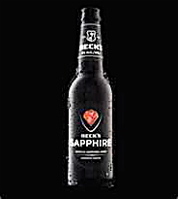
Bud 2Anyone else catch those teaser ads by Budweiser featuring a black label against a golden amber background? Turns out Anheuser-Busch has two new beers rolling off its production lines in St. Louis: Budweiser Black Crown and Beck’s Sapphire.

Why add two more beers to an already overcrowded domestic market? The simple answer is both labels need a boost and the hook is they’ve increased the alcohol content.

Budweiser introduced its Black Crown edition Monday, which offers 6 percent alcohol by volume compared with the usual 5 percent.

I picked up a six-pack and tried it last night. It’s a bit like two beers colliding. The front end of Black Crown has a complex flavor, slightly woody, flavorful, with a more pronounced hops taste than a generic domestic beer, but lightens up on the backend, and finishes clean, much like a regular Budweiser.

There is an awkward moment of transition between the complex start and clean finish that caused me to wince. It’s an imperceptible second on the tongue, but it catches slightly, and made me wonder exactly why this beer is being forced upon the market.

Black Crown is the end result of a year-long selection process known as “Project 12.” Budweiser had its head beermakers at each of its 12 U.S. breweries come up with a unique recipe for an experimental brew. Six were selected for production, and after 25,000 taste-tests, Black Crown was the clear winner.

The increased alcohol content is no joke. This is no “sit around the house and watch a game” kind of refreshment. It’s more of a club beer. Lights and music take a customer’s mind off the specific taste, and the higher alcohol content leads to faster intoxication.

Black Crown is intended to build upon the success of Bud Light Platinum, which came out last January and also has 6 percent alcohol. The idea is to juice the Budweiser label after sales fell 7 percent domestically in the third quarter.

Black Crown is designed to compete with the idea that the public is seeking a more premium brand of crafted beer as opposed to the traditional mass-produced bottles. At $6.75 a six-pack, Anheuser-Busch gets to offer another Bud product but at a slightly higher price point, yet a bargain compared to other green-bottled imports.

Now before you think it’s odd that Anheuser-Busch owns Beck’s – flip that thought around. Four years ago the combined Belgian-Brazilian multinational brewing company InBev bought Anheuser-Busch for $52 billion, and merged it with the company’s labels creating Anheuser-Busch InBev (AB InBev).

This behemoth is the world’s largest brewer, with nearly 25 percent of the global market share. Its labels include Beck’s, Budweiser, Busch, Corona, Hoegaarden, Michelob, Natural Light, Spaten, and Stella Artois.

Beck'sBeck’s already is the most popular German beer, and releasing a version with increased alcohol content does nothing for the brand overseas where brews have always been stronger, which is why Sapphire is only for sale in America.

Both new beers are getting posh treatment from Madison Avenue in terms of advertising and packaging. Watch for their official unveiling during the Super Bowl on Feb. 3, where over 112 million thirsty consumers will be watching.

But with these two new releases, it begs the question of how many beers can sit on the shelf at once? It seems there are 10 new IPAs or micro-brews every time I walk in a liquor store. These new entries have to take shelf-space away from something. Removing that Bud Lime would be a good place to start.

Posted in Food | Tagged , , , , | Leave a comment

HOT TICKETS for UPCOMING SHOWS

LOUISVILLE, KY

Headliners Music Hall | 1386 Lexington Road | Louisville, KY |502-584-8088

Circa Survive w/Minus the Bear | Mon. Mar. 11 | $20 adv-$22 dos | Doors 19:00

Frightened Rabbit | Wen. Mar. 27 | $13 adv-$15 dos | Doors 20:00

Lucero | Fri. May 03 | $18 adv-$21 dos | Doors 20:00-Show 21:00

*     *     *     *     *

Louisville Palace | 625 S. 4th St. | Louisville, KY |502-583-4555

Mike Tyson: Undisputed Truth | Sat. Mar. 23 | $29.50-$89.50 | 20:00

Leonard Cohen | Sat. Mar. 30 | $49.50-$252.50 | 20:00

Widespread Panic | Tue. Apr. 16 | $39.75-$50 | 19:30

Widespread Panic | Wed. Apr. 17 | $39.75-$50 | 19:30

*     *     *     *     *

Zanzabar | 2100 S. Preston Street | Louisville, KY | 502-635-9227

Sammy Bananas | Fri. Jan. 25 | $5 | Doors 21:00-Show 22:00

The Helio Sequence w/Shabazz Palaces | Tue. Jan. 29 | $12 | Doors 20:00-Show 21:00

Silver Tongues w/Matt Duncan | Sat. Feb. 02 | $6 | Doors 20:00-Show 21:00

Menomena w/Guards | Sat. Feb. 16 | $12 adv-$14 dos | Doors 20:00-Show 21:00

Milo Greene | Sat. Mar. 16 | $12 | Doors 20:00-Show 21:00

*     *     *     *     *

LEXINGTON, KY

Buster’s | 899 Manchester Street | Lexington, KY | 859-368-8871

Umphrey’s McGee | Thu. Jan. 31 | $20 adv-$25 dos | Doors 20:00-Show 21:00

*     *     *     *     *

Cosmic Charlie’s | 388 Woodland Avenue | Lexington, KY | 859-309-9499

Umphrey’s McGee After-Party w/ AFRO | Thu. Jan. 31 | $5 | Doors 21:00

Born Cross Eyed | Sat. Mar. 02 | $8 | 22:00

*     *     *     *     *

CINCINNATI, OH

Bogart’s | 2621 Vine Street | Cincinnati, OH | 513-872-8801

Flogging Molly | Sun. Jan. 27 | $29 | 18:30

*     *     *     *     *

Madison Theater | 730 Madison Avenue | Covington, KY | 859-491-2444

Yonder Mountain String Band | Thur. Jan. 31  | $25 | Doors 19:30-Show 20:30

Dark Star Orchestra | Fri. Feb. 08 | $22 | Doors 20:00-Show 21:00

Minus the Bear w/Circa Survive | Fri. March 08 | $23 | Doors 18:30-Show 19:30

Animal Collective w/Dan Deacon | Tue. Mar. 12 | $25 | Doors 19:00-Show 20:00

*     *     *     *     *

The Southgate House Revival | 111 E. 6th Street | Newport, KY | 859-431-2201

Lucero | Thu. May 02 | $20 adv-$22 dos | Doors 20:00-Show 21:00

*     *     *     *     *

Taft Theater | 317 E. 5th Street | Cincinnati, OH | 513-232-6220

Brit Floyd | Fri. Mar. 08 | $29.50-$42.50 | Doors 19:00-Show 20:00

*     *     *     *     *

U.S. Bank Arena | 100 Broadway Street | Cincinnati, OH | 513-421-4111

Muse | Wen. Feb. 27 | $39.50-$49.50 | 19:00

*     *     *     *     *

COLUMBUS, OH

The Basement | 391 Neil Avenue | Columbus, OH | 614-461-5483

Menomena | Fri. Feb. 15 | $13 adv-$14 dos | GA | 20:30

*     *     *     *     *

LC Pavilion | 405 Neil Avenue | Columbus, OH | 614-461-5483

Brit Floyd | Thu. Mar. 07 | $35 | GA | 19:00

The Avett Brothers | Sat. May 25 | $38 adv-$40 dos | GA | 18:30

*     *     *     *     *

Nationwide Arena | 200 W. Nationwide Boulevard | Columbus, OH | 614-246-200

Tiesto | Thu. Feb. 28 | $48.40 | GA | 19:00

*     *     *     *     *

Newport Music Hall | 1722 N. High Street | Columbus, OH | 614-294-1659

Grace Potter and the Nocturnals | Wed. Jan. 30 | $22 adv-$25 dos | GA | 19:00

Dark Star Orchestra | Sat. Feb. 09 | $25 adv-$27 dos | GA | 20:00

Django Django | Wen. Mar. 13 | $5 | GA | 19:00

Cold War Kids | Tue. Apr. 09 | $20 adv-$22 dos | GA | 19:00

Black Rebel Motorcycle Club | Sat. May 11 | $20 adv-$22 dos | GA | 19:00

*     *     *     *     *

Schottenstein Center | 555 Borror Drive | Columbus, OH | 614-688-3939

Muse w/Dead Sara | Tue. Mar. 05 | $39.50-$49.50 |  19:00

*     *     *     *     *

INDIANAPOLIS, IN

The Vogue | 6259 N. College Avenue | Indianapolis, IN | 317-259-7029

The Hives w/The Zero Boys | Mon. Mar. 04 | $25 | Doors 19:00-Show 20:00

Galactic w/Nigel Hall | Thu. Arp. 04 | $20 adv-$22 dos | Doors 19:00-Show 20:00

Black Rebel Motorcycle Club | Mon. May 13 | $18 adv-$20 dos | Doors 19:00

*     *     *     *     *

Radio Radio | 1119 E. Prospect Street | Indianapolis, IN | 317-955-0995

Pokey LaFarge | Fri. Feb. 22 | $12 adv-$15 dos | Doors 20:00-Show 21:00

Milo Greene w/Kopecky Family Band | Thu. Mar. 21 | $12 | Doors 20:00-Show 21:00

*     *     *     *     *

NASHVILLE, TN

Exit/In |2208 Elliston Place | Nashville, TN | 615-321-3340

Graveyard w/The Shrine | Wen. Jan. 30 | $15 | Doors 20:00-Show 21:00

*     *     *     *     *

Ryman Auditorium | 116 Fifth Avenue North | Nashville, TN | 615-889-3060

Morrissey | Tue. Jan. 29 | $35.50-$69.50 | 20:00

The XX | Thu. Jan. 31 | $32 | 19:30

Posted in Music | Leave a comment

Lynn’s Paradise Cafe Closes Doors

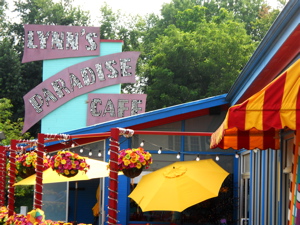
Lynn'sLynn’s Paradise Cafe is no more.

The Louisville comfort food stalwart abruptly closed its doors last Friday after 22-years in business.

This was not due to a lack of customers. Lynn’s had a devoted clientele drawn to the shimmering sign outside, the bizarre mish-mash of colors and lights, and eclectic decor.

Instead of the atmosphere feeling contrived, it translated into ambiance, which is no easy feat considering the kitsch-factor on display, but it balanced this with offering solid comfort foot that was southern based.

The Walnut-Crusted Fried Chicken, Mom’s Meatloaf, and the Paradise Hot Brown were menu staples.

Lynn’s on a busy night was a sight to behold. It literally glowed from blocks away.

It was a destination restaurant, a Louisville original, and part of the “Keep Louisville Weird” movement.

Lamps and more lamps.

Lamps and more lamps surround the graffiti tree.

Lynn’s annual “Ugly Lamp Contest,” held at the Kentucky State Fair, ensured lighting at the restaurant was never lacking. Contestants could enter in two categories Born Ugly or Made Ugly, and if entrants didn’t want their lamps back they could always go up in the restaurant.

Lynn’s garnered plenty of national press. It was featured on The Oprah Winfrey Show; Adam Richman brought his Man v. Food Nation program by to sample the Quadruple “B” French Toast; owner Lynn Winter was on the Food Network’s Throwdown! with Bobby Flay, where she defeated the celebrity chef in a breakfast showdown; and Lynn’s was named “One of the Four Most Fun Restaurants in America” by Esquire magazine.

It was a favorite spot for tourists, out-of-town guests, and locals alike. You couldn’t find a better spot to nurse a hangover than Lynn’s. The biscuits and gravy were substantial, and the bartenders mixed a mean Bloody Mary.

Current U.S. Secretary of State Hillary Clinton dropped by Lynn’s while campaigning for president in 2008.

It was a festive place and comfortable, more reliable than ambitious, but that is what made the joint – it delivered when you were in the mood.

After 22 years, the restaurant was an ingrained part of The Highlands neighborhood where it resided, but this begs the question of why did such a popular destination close?

It happened fast. Word didn’t filter out in time to prevent a hungry crowd from showing up outside the restaurant early Saturday morning only to find the parking lot blocked by traffic cones and security guards posted to deter would-be brunchers.

Lynn's 2Lynn’s sudden demise came at the hands of a controversial new employee policy that resulted in two workers being fired and hard feelings being felt by many of Winter’s employees.

The policy required waitstaff to bring $100 in cash to work, so servers had available funds to tip the table bussers and bartenders. This new policy dovetailed with another new one, which shifted paying servers’ tips that came via credit cards to their paychecks instead of them being cashed out at the end of their shifts.

Considering the prevalence of credit card payments over cash these days, and the measly amount earned by waitstaff hourly, these new policies put many in a bind.

Allegations of employee mistreatment went public after the two staff members were terminated, leading to a campaign being created by Kentucky Jobs with Justice called Service Workers for Justice.

Sure by not cashing out tips nightly it probably saved the restaurant some time and trouble, but more egregiously it’s possible with these new policy changes that Winter was attempting to lower the amount she had to pay her support staff in total.

Instead of making $7.25 per hour, which is minimum wage, Kentucky’s labor laws allow employers to pay staff $2.13 per hour if an employee makes at least $30 per month in tips.

That decreased hourly amount is standard for waitstaff, as they rely on tips for the majority of their compensation, but this would severely decrease what table bussers and Lynn’s bartenders would make, which in turn would save Lynn Winter money.

The restaurant’s closure has left between 80 and 100 people out of work.

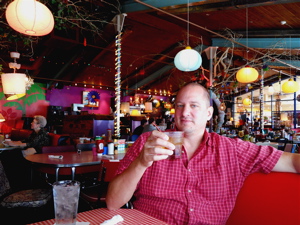
The Llama at leisure in Lynn's enjoying a Maker's Mark and Coke.

The Llama at leisure in Lynn’s enjoying a Maker’s Mark and Coke.

For customers holding gift cards, Lynn’s Paradise Cafe plans to open its “World of Swirl” gift shop one last time according to its Facebook page, to allow for use of existing gift cards or to come in for refunds.

No doubt this is a bittersweet ending for such an esteemed eatery, and one that sounds preemptive. Hopefully this story doesn’t get any darker. In my mind’s eye I see attorneys fluttering around Lynn’s Paradise Cafe like buzzards circling a new-fallen victim.

Still I will toast Lynn’s one last time for the good of the cause and offer it a fond farewell.

Lynn’s Paradise Cafe

984 Barret Avenue | 502-583-3447

Posted in Food, Reviews | Tagged , | Leave a comment

Metallica is “Some Kind of Monster”

MonsterUnder the heading of better late than never, I finally viewed a copy of the 2004 Metallica documentary “Some Kind of Monster.” This film captures the creative and personal tensions erupting between band members during the recording of their 2003 disc “St. Anger.”

This easily could have been way too much information about nothing that interesting, but between the four guys who actually make the behemoth of Metallica go, and the reality of them trying to actually be functioning human beings with lives, the movie becomes a fascinating look at what happens when the wheels come off in an extremely public setting.

The movie arrives at a moment in Metallica’s history that is a pressure cooker situation.

After the huge success of “The Black Album,” followed by “Load” and ReLoad,” all of which debuted at number one on the Billboard 200 and went multi-platinum, the band needed to come up with an entire album of Metallica-worthy material, but had nothing prepared as they walked into the recording studio. The plan was to jam together and see what happened…

At the same time Metallica was embroiled in an unpopular lawsuit against file sharing service Napster, and substance abuse issues were fueling tensions.

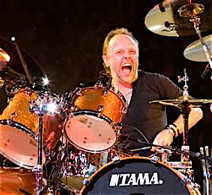
Drummer Lars Ulrich.

Drummer Lars Ulrich.

It took bass player Jason Newsted quitting the band, singer and rhythm guitarist James Hetfield entering rehab, plus a ton of therapy and hard work writing and recording before the boys pulled it back together in fine Metallica fashion – over one year later.

What distinguishes “Some Kind of Monster” from other variations of behind the scenes looks at big-time rock-n-roll self-destruction is the level of public introspection.

The discord between Metallica’s members led its management, Q-Prime, to hire performance-enhancing coach Phil Towle, who passes as a therapist, to help the band-mates better understand each other as musicians and human beings.

Metallica is one of the most influential heavy metal bands in history. It has sold over 100 million albums, enjoyed a string of five consecutive records that have debuted at number one on the Billboard 200, and won nine Grammy Awards.

Lead guitarist Kirk Hammett.

Lead guitarist Kirk Hammett.

These boys are money-printing machines. When you consider the original members were teenagers at the beginning of this journey, they have grown up inside this beast of their creation that is Metallica.

In a band such as this excess is your calling card. Alcohol, drugs, women and dangerous pursuits come with the territory, and there has never been anyone around to say no to whatever these guys wanted to do.

Eventually, without a reality check, shit will go sideways.

What’s interesting is Metallica was never supposed to be the biggest band in America. They were outsiders. Their first four records received no airplay. They didn’t do videos. It was all underground success.

The band formed in 1981 in Los Angeles with Hetfield, Lars Ulrich on drums, Dave Mustaine, of Megadeth fame, on lead guitar, and Ron McGovney on bass.

[METALLICA – SAD BUT TRUE]

Mustaine was fired from Metallica in 1983, due to his abusive personality in relation to extreme drug and alcohol consumption. He was replaced the same day by Exodus lead guitarist Kirk Hammett, who has been with the band ever since.

Bassist Jason Newsted.

Bassist Jason Newsted.

Metallica’s bass player has always had a certain mystique to it. McGovney was the original bassist but left quickly in 1982 due to personality clashes with Ulrich and Mustaine. He was replaced by Cliff Burton, a classic Metallica guy, who died tragically in Sept. 1986, when the band’s tour bus overturned in Sweden and crushed him.

Burton was replaced by Newsted, who played with Flotsam and Jetsam. While Metallica surged in popularity after Newsted joined the band, the new member endured considerable hazing from Ulrich and Hetfield. The chaotic lifestyle and lack of creative input eventually forced Newsted to leave Metallica.

“At that time (2001) the manager suggested that we have a psycho-therapist come in, a man that meets with pro-ball teams, you know, big ego, big dollar guys that can’t get along, but have to make some kind of entity flow so everybody else and everybody can make the money,” said bassist Jason Newsted. “I actually said I think this is really fucking lame and weak, that we cannot get together, us, the biggest heavy band of all time, the things we’ve been through, the decisions we’ve made about squillions of dollars and squillions of people, and this, we can’t get over this.”

One stabilizing force for Metallica during this period was Bob Rock. He produced all the band’s records since 1991’s “The Black Album.” Rock also played bass and sat in with Metallica through the recording of “St. Anger,” until a new bass player was hired.

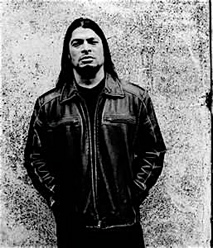
New Metallica bass player Robert Trujillo.

New Metallica bass player Robert Trujillo.

It’s fascinating to watch them audition potential new members. Tryouts included: Danny Lohner of Nine Inch Nails; Twiggy Ramirez (Jeordie White) of Marilyn Manson; Pepper Keenan of Corrosion of Conformity; Scott Reeder of Kyuss; Chris Wyse of The Cult; and Eric Avery of Jane’s Addiction.

In the end it was Robert Trujillo, who played with Ozzy Osbourne, Suicidal Tendencies and Infectious Grooves, who fit best.

Much of the behavior on display throughout this film is marked by immaturity, as these are big kids that never had to grow up. They generate a ton of money and do what they do well, but they reside in a fantasyland, where wealth insulates them, so they quarrel like children.

The level of insecurity is impressive.

Admittedly, I cannot imagine living in the shadow of something like Metallica, nor fully appreciate the vulnerability of going out on stage before 100,000 intoxicated fans if you are feeling self-conscious or fragile.

Singer and guitarist James Hetfield.

Singer and guitarist James Hetfield.

“I’m working really hard on being the best dad, and father, and husband, I can be – and the best me,” said guitarist James Hetfield, after completing his rehab program. I don’t want to lose any of the stuff I have. I know it could all go away at one time, and that is the tough part of life. This is a total rebirth for me. I’m looking at life in a whole new way. All the other drinking and all the other junk that I was stuck in, it was so predictable, so boring. I’m out there looking for excitement and all this stuff, the results were the same man. I wake up the next day somewhere, in some bed, I don’t know who this person is next to me, and I’m drunk, completely hung over, and have a show to do, and the result is the same, you know. When life now is pretty exciting. You don’t know what’s gonna happen when you’re kinda clear, and here, and in the now.”

“Some Kind of Monster” guts Metallica open. It’s like having closed circuit television to watch other peoples’ therapy sessions.

Prior to watching this film I figured I would be fast-forwarding through some of this footage, as the film runs 141 minutes, but it’s similar to watching a train wreck – I couldn’t look away. It’s interesting enough and has an honest quality to it that demands attention.

It’s bizarre to watch these speed metal tough guys drop their guard to discuss what troubles them. It reminded me of Tony Soprano’s portrayal, only this is real.

In the end “St. Anger” debuted at number one in 30 countries, and the title track won the Grammy Award for Best Metal Performance in 2004.

The film, “Some Kind of Monster,” faired well too, winning the Independent Spirit Award for Best Documentary Feature.

With as much turmoil and invasive examination as these guys went through, when the closing scene to the film comes on, showing the band backstage right before they are about to play a giant stadium show, it’s apparent the band and the crowd need each other.

A Metallica show is therapy to those who attend – you can get your aggression out without being judged, and the band can do the same.

Let the healing begin.

[METALLICA – FADE TO BLACK]

Posted in Music, Reviews | Tagged , , | 1 Comment

Cooperation Is Key For A Successful 2013 Kentucky Legislative Session

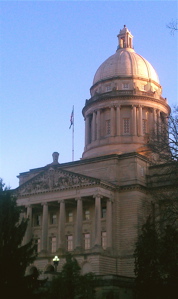
The Kentucky State Capitol.

The Kentucky State Capitol on an optimistic morning.

It’s January again, which means the Kentucky General Assembly is back in session for another round of its own special brand of realty programming.

Political gamesmanship, witticisms and wastes of time are sure to be on display over this short 30-day session, set to end on March 26, but don’t be surprised if it goes into overtime.

Some of the cast members have changed.

Perpetual sourpuss Republican Senate President David Williams took the tempting bait from Gov. Steve Beshear, and accepted a judicial appointment. The vacancy opens the door to Sen. Robert Stivers, R-Manchester, to ascend to Senate president. Stivers is a wealthy attorney, who is a serious character, but from a leadership standpoint more approachable and relaxed than the cantankerous Williams.

Taking over Stiver’s Senate majority leader duties will be Sen. Damon Thayer, R-Georgetown, who can flatter with the best of them. This silver-tongued devil is a horse-industry consultant, who sides with Gov. Beshear on wanting to see casino gambling at horse tracks.

On the House side Rep. Sannie Overly, D-Paris, became the first woman elected to a leadership spot in the Kentucky House of Representatives when she defeated former Democratic Caucus Chair Bob Damron, D-Nicholasville. Overly, 46, is an attorney who has served in the House since 2008. She is rumored to be a possible Democratic challenger for the U.S. 6th District House seat recently won by Republican Andy Barr.

The rest of the players remain the same.

With no presidential election to worry about this year, no bitter feelings surrounding a gubernatorial election, and no David Williams to stir the proverbial pot of partisan politics, maybe something will get accomplished.

Revenue and pension questions abound.

Kentucky’s public pension system has been neglected for years. It ranks 49th in the country, trailing only Illinois in terms of unfunded liability.

Kentucky has a whopping 44-percent of the money it needs on hand. That is a shortfall in the neighborhood of $33 billion.

Pension watchdog groups consider anything under 80-percent to be problematic.

With 117,000 current and former state employees guaranteed lifetime pensions by law, any further collapse of the pension system could trigger mandatory tax increases and sap money from already needy areas like public safety and education.

A 2012 legislative task force recommended allocating an extra $327 million in 2015 and increasing that to $1 billion by 2020, but failed to identify where to find that extra cash.

Nothing can get done this session aside from speculation, as any real changes will have to wait until 2014, when the new state budget is taken up.

Likely the solution will combine newfound tax revenue along with decreases in certain elements of the benefits package currently enjoyed by state retirees.

Gov. Beshear has already cut $1.6 billion in spending during his tenure, leaving meager fat to trim.

This supplemental pension payment will require a new revenue stream.

The problem for Kentucky is it spends more money than it makes in taxes. The state’s budget runs on a deficit, and we’re about to tack on a $327 million bill.

This has gotten Gov. Beshear’s attention. His tax reform commission has supposedly found changes in the tax code that will generate over $600 million annually, but those changes have yet to evolve into a legislative recommendation.

When that does materialize, any votes on tax increases during this short session will be subject to passage by a super-majority in both chambers.

That is a ‘yes’ vote by 60-percent of all members.

Currently Democrats hold a majority in the 100-member House, 55-44. While Republicans outnumber Democrats 23-14 in the Senate.

Tax reform is definitely an issue that lends itself to being addressed in a special session, where votes only require a simple-majority for passage. It’s asking a lot to expect a tax increase measure to pass the Senate with a super-majority, though where else Republicans expect to find this level of revenue is unclear.

Also likely to be addressed this session is another round of debate over expanded gambling at horse tracks, as this is the governor’s pet project. It still faces opposition in the Senate even with Sen. Thayer’s support. If it can pass both chambers a constitutional amendment would finally be put before the electorate on the 2014 ballot.

Other items likely to see action are:

Raising the dropout age to 18; resolving problems with Medicaid managed care; legalizing the growth of industrial hemp; and tweaking the pill-mill bill from last year.

The big question for the General Assembly is can they play nicely together in order to get something done.

The state is chronically underfunded, yet must allocate money to combat prescription pill and methamphetamine addiction; Medicaid and other government assistance programs are on the rise; and there is the looming state employee pension crisis.

These all need immediate attention, and political gridlock is something Kentucky can no longer afford.

The recent study from the Kentucky Injury Prevention and Research Center showed that drug overdose deaths in Kentucky rose 282-percent between 2000 and 2010. Overdose-related inpatient hospitalization charges totaled $68.6 million, and emergency-room charges were another $9.6 million.

Prescription drug addiction is killing nearly 1,000 Kentuckians per year. That doesn’t begin to factor in the cost of the crime or its impact surrounding this issue. Include the ever-increasing presence of meth and heroine, and this makes for a serious drug problem that is monopolizing the time and budgets of law enforcement and the courts throughout the Commonwealth.

Some of these issues come down to quality of life in the Bluegrass.

Last year 635 lobbyists spent a record $8.8 million to push the legislative agenda. A sizeable portion of that lobbying money came from outside Kentucky, mainly from Washington, as big business spent lavishly to protect its interests in a small state.

That level of advocacy does nothing but keep legislators on edge, due to the incessant picking at them by special interest.

Decisions need to be made that are in the best interest of Kentuckians, not so wealthy corporations or K Street lobbyists can keep their profit margins high.

It’s time our public servants got some work done for the people who actually live here. And instead of running out of time to do this work and convening numerous special sessions that cost upwards of $60,000 per day – how about we try cutting down on the ridiculous stream of “special guests” and “special resolutions” that consume a sizable portion of each legislative day.

In the 2012 session, 420 symbolic or ceremonial resolutions were passed over 60 days. There’s a speech that goes with every one of those, and a staffer has to draft each, have it edited, printed, etc.

I understand y’all owe favors and hope to be re-elected, but we really need you to work hard these next couple years or the implications are dire.

Stop the hyper-partisan bickering and fix what ails Kentucky or go home and give someone else a try. Solutions are available, it just takes sacrifice and leadership.

Who knows, if the General Assembly can reform the tax code people might stop wondering why state government can’t get anything accomplished.

Posted in News | Leave a comment

Lance Armstrong is Going Down HARD

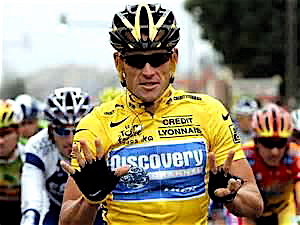
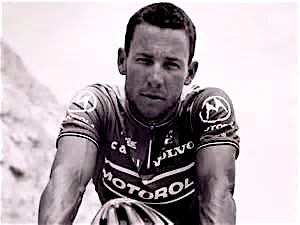
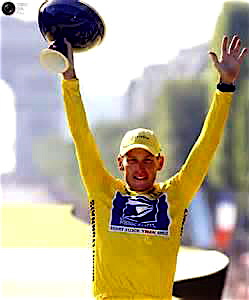
Lance Armstrong after winning his record seventh Tour de France.

Lance Armstrong after winning his record seventh Tour de France.

Oh how the mighty have fallen.

Lance Armstrong was one of the greatest athletes of his generation or any other. He owned a seat at the table with Michael Jordan, Wayne Gretzky, Muhammad Ali, Pele, Roger Federer and Tiger Woods.

That is all gone now as allegations of doping, combined with Armstrong’s persistent lying and penchant for attacking his accusers has consumed this famed athlete’s reputation.

The myth of Lance Armstrong stems from his modest accomplishments as a professional cyclist between 1992 and 1996, when he was then suddenly diagnosed with stage three testicular cancer, which had spread to his lungs, abdomen and brain.

His doctor gave him a 40 percent chance of survival after surgery.

Improbably this tough Texan beat those odds, and went on to win a record seven consecutive Tour de France titles between 1999 and 2005.

Doping allegations are nothing new to Armstrong, they have persistently followed him throughout his career, but he vehemently has denied them. In fact he took it a step further. Those who challenged Lance often were intimidated and threatened, subsequently hauled into court, then discredited, ruining the careers and reputations of many.

I understand wanting to protect the integrity of a career like Armstrong’s, but it was the way he went after his accusers that always seemed curious.

It makes sense in retrospect when considering in addition to Armstrong’s cycling success, there is the money he earned, his sponsors, fans, and the basis for his Livestrong Foundation – that whole empire was built upon seven tainted yellow jerseys.

If the victories crumbled it all could collapse.

*     *     *     *     *

How could the world’s greatest cyclist be doping and never get caught?

Travis Tygart, head of USADA.

U.S. Anti-Doping Chief Travis Tygart.

The explanation came on October 10, 2012 when the U.S. Anti-Doping Agency (USADA), released its comprehensive report citing witness testimony, financial records and laboratory results, that together indicated Armstrong was the central figure in a vast doping scheme and repeatedly lied under oath.

[VIEW USADA REPORT]

All seven of his tour titles were vacated and Armstrong was banned from participating in cycling for life.

USADA chief Travis Tygart said it reflects “the most sophisticated, professionalized and successful doping program that sport has ever seen.”

Everybody around Armstrong came up dirty for something: EPO, testosterone, steroids, blood doping – they all lead to increased stamina, recovery and performance; or they helped supply the drugs and cover-up the illicit activity. Lance would have us believe he saw nothing and participated in no usage of performance enhancing drugs (PED).

It turns out Armstrong did test positive once for a steroid, during the 1999 Tour, but was not sanctioned because the team produced a fictitious backdated prescription that showed Armstrong received this drug in a cream form to treat saddle sore.

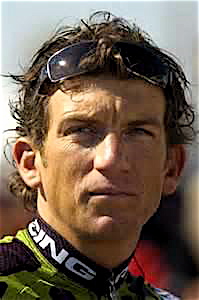
Tyler Hamilton, Armstrong's teammate on the U.S. Postal Service team.

Tyler Hamilton maintained the cycling code of silence for years until he was questioned before a grand jury.

There also is the allegation that Armstrong tested positive for the blood-boosting hormone EPO, which controls red blood cell production, in June 2001 during the Tour de Suisse, a warm-up race for the Tour de France.

This came out under sworn testimony by Tyler Hamilton, Armstrong’s training partner and teammate on the U.S. Postal Service team. Hamilton rode with Armstrong on his Tour victories in 1999-2001, and won a gold medal in the 2004 Olympics. He is now retired after testing positive three times, losing his gold medal, and receiving suspensions totaling 10 years.

According to Hamilton, Armstrong provided him EPO and they both participated in the use of EPO, testosterone and blood doping numerous times in the presence of each other while on tour.

When asked in a 60 Minutes interview about how Armstrong got away with the positive test in Switzerland Hamilton said, “People took care of it. I don’t know all the exact details, but Lance’s people and the people from the other side, I believe from the governing body of the sport, figured out a way for it to go away.”

[SEE 60 MINUTES INTERVIEW WITH TYLER HAMILTON]

Lacking additional positive tests the USADA corroborated its suspicions by conducting further testing on blood samples already provided by Armstrong.

Christopher J. Gore, the head of physiology at the Australian Institute of Sport, analyzed 38 blood samples taken from Armstrong between February 2009 and April 2011. Those taken during the 2009 and 2010 Tours showed blood values whose likelihood “of occurring naturally was less than one in a million.”

Additionally, the USADA obtained data from French officials who had retested Armstrong’s samples from the 1999 Tour. The Union Cycliste Internationale (UCI), the world governing body for sports cycling, ruled these samples had been mishandled and couldn’t be used to prove guilt, but six of the samples showed “resoundingly positive values” for EPO.

To limit exposure to positive tests Armstrong and his teammates would employ tactics to stall and deceive drug testers. Sometimes it was as simple as not answering the door when officials would come to take blood samples. By stalling they had a chance for the drugs to work through their systems or employ drug-masking techniques.

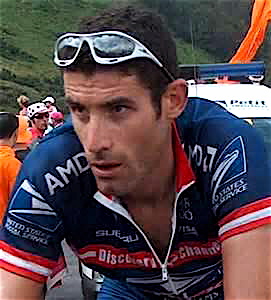
Longtime Armstrong ally and teammate George Hincapie.

Longtime Armstrong ally and teammate George Hincapie.

According to the report, Armstrong abruptly dropped out of one race after his teammate George Hincapie warned him through a text message that drug testers were at the team’s hotel. Armstrong had, Hincapie said in an affidavit, just taken a solution containing olive oil and testosterone.

During his first Tour de France victory in 1999, Armstrong’s drug of choice, according to the sworn affidavits, was EPO. At the time there was no test for that, but when rumors began circulating about the arrival of an EPO test, Armstrong and some of his teammates switched to withdrawing their own blood, then reinfusing the blood at a later date when it would provide an oxygen boost. This technique, known as blood doping, didn’t have a test yet either.

Testimony described how the riders turned their hotel rooms into makeshift blood-transfusion centers. Pictures would be found left off the walls in their rooms, where the hooks had been used to hang intravenous bags of blood.

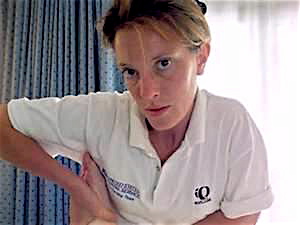
One person who saw all this was Emma O’Reilly, who in 1996 began as a soigneur on the U.S. Postal Service cycling team. She massaged all the riders’ sore muscles, laundered their clothing, booked hotel rooms, prepared the food, whatever was necessary to get the riders to the next stop.

O’Reilly quickly realized there was more to her job description than met the eye.

She wound up transporting doping materials across borders, disposed of drugs and syringes, and distributed performance-enhancing drugs to the team’s riders.

The bag lady, Emma O'Reilly, who transported performance-enhancing drugs for Armstrong's team.

The bag lady, Emma O’Reilly, who transported performance-enhancing drugs for Armstrong’s team.

O’Reilly even used her makeup skills to help cover the bruised arms of cyclists who were shooting up banned substances.

She tried getting her story out in 2003, in the book “L.A. Confidentiel: Les Secrets de Lance Armstrong,” and Armstrong had her hauled into court and demonized as a prostitute with a drinking problem.

This time her sworn testimony is one of 26 accusers, including 11 former teammates, which make up the heart of the USADA’s case against Armstrong.

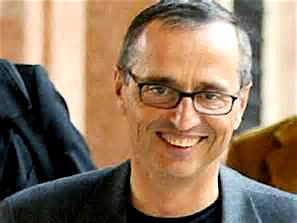
Then there is the money trail linking Armstrong to disgraced physician and training guru Michele Ferrari, who also has received a lifetime ban from the USADA. Many consider him the mastermind behind this doping scandal.

Dr. Feelgood, Michele Ferrari, who is believed to be the supplier of PEDs to Armstrong.

Dr. Feelgood, Michele Ferrari, who is believed to be the supplier of PEDs to Armstrong.

Financial records show at least $210,000 being paid by Armstrong to Ferrari. Plus there are emails cited in the report from 2009 where Armstrong asked Ferrari’s son if he could make a $25,000 cash payment the next time they saw each other.

UCI President Pat McQuaid concurred with the USADA’s findings and disqualified all of Armstrong’s cycling results after August 1, 1998, and banned him for life.

“Lance Armstrong has no place in cycling and he deserves to be forgotten,” McQuaid said.

*     *     *     *     *

Armstrong filed no appeal to this decision. Instead he released a statement that said in part, “There comes a point in every man’s life when he has to say, “Enough is enough.” For me, that time is now.”

Suddenly Armstrong was “finished with this nonsense” of being accused of using PEDs, and being the subject of a two-year federal criminal investigation.

Did Armstrong simply lose the will to fight? It’s more likely he realized he no longer could bully his way past the truth.

Lance 3As easy as it is to vilify Armstrong, he was by no means the only rider cheating. The report goes on to establish that “20 of the 21 riders” that finished in the top three on the Tour between 1999 and 2005 have all been directly tied to doping.

Repercussions for Armstrong from this damning report have been swift. Longtime sponsors Nike, Trek Bicycles and Anheuser-Busch have all dropped him, and his tarnished reputation required he distance himself from the Livestrong Foundation.

Legal challenges are already in the works from insurers seeking to recover millions of dollars paid to Armstrong for bonuses related to his Tour victories.

There also is the possibility that federal prosecutors might resume a criminal investigation into Armstrong having possibly used government money to finance a doping operation while as a member of the U.S. Postal Service team. Charges could include defrauding the government, drug trafficking , money laundering and conspiracy.

This week reports surfaced that in 2004 representatives of Armstrong’s offered the USADA a donation of $250,000, articulated to be a contribution to help fight doping in cycling. As this was clearly a conflict of interest for the agency it turned down the money, but makes Armstrong appear to have conspicuously attempted to bribe the very agency that was investigating him for that same behavior.

Now we’re hearing rumors Armstrong wants to come clean and apologize. Excuse me if I wretch for a moment at this supposed attempt at sincerity.

Lance has agreed to an exclusive 90-minute interview with Oprah Winfrey set for Jan. 17. Anyone taking a seat on Oprah’s couch generally has something personally damaging to reveal.

Lance 2That he cheated is no surprise. Everyone apparently was doping. It’s very similar to the steroid scandal in baseball. The difference here is that guys like Barry Bonds, Roger Clemens and Jose Canseco were never particularly loved. Sammy Sosa and Mark McGwire shared one memorable steroid-fueled season, but none of these players are in Armstrong’s class.

Lance transcended his sport. He made that jump from being just an athlete, to becoming an icon, and brought along with him children, cancer survivors, and thousands seeking inspiration.

His accomplishments remain relevant. He did ride up those mountains; same as Barry Bonds did knock all those balls out of the park – these are not easy tasks. It’s the depth of deceit employed, and the vehemence with which he attacked those that challenged his lie that distinguishes Armstrong’s fall from grace.

Just this week we witnessed some of the professional retribution that is likely to last for years against baseball players implicated in using steroids, as no players were selected for the 2013 Hall of Fame class.

There are public and professional penalties to be paid for cheating. Some may last well past an offender’s lifetime. What Armstrong needs to consider is whether he is about to do a complete 180-degree shift and go from hero to villain.

I imagine he is just starting to realize this. Armstrong is a relatively young man at 41. He wants to compete in triathlons but can’t participate in any sport subject to anti-doping regulations, and I doubt many companies are calling on him to make public appearances.

Those walls close in fast, and his friends are few, as most have had to give up everything and tell the truth about the doping scandal, including Armstrong’s involvement. So unless Armstrong comes clean he is staring at a lonely stretch of life.

Perhaps recognizing this possibility is what spurred Armstrong to book a spot on Oprah’s couch.

Lance doesn’t want to become the next Pete Rose.

Posted in Exercise, News | Leave a comment

The Phunny Phorty Phellows Begin the March to Mardi Gras

This Phunny Phellow is already on the streetcar getting his drink on.

This Phunny Phellow is already on the streetcar getting his drink on.

I trust everyone had a happy Epiphany? Not sure? It took me doing a touch of religious research to figure that one out as well. More to the point the arrival of the Epiphany means Carnival season is officially under way.

This story falls under the heading of “only in New Orleans.”

Sunday night, the Phunny Phorty Phellows boarded a streetcar in New Orleans amongst considerable fanfare, wearing costumes and in various states of sobriety, they did their yearly duty of riding roundtrip on the St. Charles Line to signify the start of the Carnival season, then headed to their coronation ball.

I’ve lived in New Orleans twice and still haven’t unlocked all the meaning behind the city’s festivities. It’s easy to get caught up in an excuse to celebrate, but after watching Mardi Gras up close I realized there is a deeper meaning behind all the floats and merriment.

The mystery of New Orleans - a beautiful woman captured in the hazy light, drinks and merriment in the air, the possibilities are endless...

The mystery of New Orleans – a beautiful woman captured in the hazy light, drinks and merriment in the air; the possibilities are endless…

New Orleans is one of America’s older cities, established in 1718, and it is a place that brims with customs and traditions. There continues a strictly adhered to debutant season, where young women have their coming out parties, secret societies abound and memberships in Mardi Gras Krewes are handed down over generations like season tickets to Kentucky basketball.

When I say Epiphany I’m not talking about a sudden insight. It’s a Christian celebration that commemorates the manifestation of Christ on Earth in human form. This comes on Jan. 6 and can be marked by a feast, or in this case a festival of Phunny Phorty Phellows riding amuck in a streetcar.

It also marks the conclusion of the 12 Days of Christmas. The math gets a little fuzzy here, but the 12 days start on Christmas and historically gifts would be exchanged through Jan. 5, but commercialism, practicality, and the celebration of the New Year put a stop to much of that long ago.

The modern version looks upon Jan. 6 as the Twelfth Night, the end of the 12 Days of Christmas, and the Epiphany all rolled into one.

Mardi Gras, through all its hedonism, is a religious undertaking. It is a pre-Lenten carnival that allows people to exercise their demons before Ash Wednesday, when 40 days of fasting and penance begin to usher in Easter.

Phunny 5It was first celebrated in Louisiana in 1699. Carnival balls began being held as early as 1743, and in 1857 the Mistick Krewe of Comus, the first and oldest Mardi Gras Krewe, held its first parade and started the tradition of using floats.

Many seem to believe Mardi Gras is just about Fat Tuesday and the revelry found on Bourbon Street, but really Mardi Gras is more about all the days leading up to Fat Tuesday.

Between Jan. 6 and Feb. 12, which is Mardi Gras day in 2013, there will be almost 90 parades in the New Orleans area. Before the huge crowds begin showing up for the super parades like Rex and Bacchus, locals will be out with their kids, putting up modified ladders all painted and decorated, so kids can get above the adults and catch the beads and trinkets being thrown from the floats. Yeah there is plenty of drinking throughout and parties, but really Mardi Gras is a family affair.

The ride of the Phunny Phorty Phellows, who first appeared in 1878, holds status because it heralds in the arrival of Mardi Gras.

This woman's striking blue eyes just jumped out from behind her mask.

This woman’s striking blue eyes just jumped out from behind her mask.

Another reason that might help make sense for why thousands of people would come out on a Sunday night wearing masks and carrying signs to watch some crazies in a streetcar is Twelfth Night signifies the end of the off-season in New Orleans.

Aside from the Sugar Bowl, which only brings in sports fans who mostly confine themselves to the French Quarter, New Orleans has been relatively quiet since Halloween. That concludes the official party season, unless you count the Saints and LSU football.

This makes the advent of the Phunny Phorty Phellows a particularly welcomed sight. The start of Mardi Gras season is sort of like Groundhog Day – the shadow is gone and the alarm clock has sounded – hibernation is over. Time to find a costume and get your to-go cup ready to roll.

The Storyville Stompers bring that classic New Orleans brass sound.

The Storyville Stompers bring that classic New Orleans brass sound.

The scene at the Carrollton Street car barn is an oddity. Those who prefer to see the Phellows off gather here around 6:00 p.m. to tailgate prior to the streetcar departing promptly at 7:00 p.m.

There can often be several hundred folks clad in masks and costumes, drinks in hand, waiting for the countdown. The Storyville Stompers Brass Band keeps the atmosphere pumping. Commotion surrounds the streetcar, which is bedecked in yuletide dressing, with a sign hanging from it reading, “It’s Carnival Time!”

The mood is full of humor and whimsy. After an official ribbon cutting ceremony, this rowdy krewe and the Stompers are herded onto the streetcar and away they go.

The revelers sip champagne and throw the first beads of the season to spectators along the route. Two King Cakes are on board, one for the ladies and one for the gents. The lucky two who pull the slices containing the gold plastic Carnival babies are declared the Queen and Boss Phellows for the year.

This merriment goes right in keeping with the Phunny Phorty Phellows’ motto of “A little nonsense now and then is relished by the best of men.”

Note: All the photos and videos in this story were taken by the Urban Llama, but are from the 2011 edition of the Phunny Phorty Phellows.

Posted in Events, Travel | Tagged , , | Leave a comment

2012 Year End Review

This little girl being born was the biggest event for me in 2012 - Welcome to the world Isabella Naomi.

Welcome to the world Isabella Naomi! This little girl being born was the biggest event for me in 2012.

With January having arrived it’s fitting to pause for a moment and glance back upon the year just passed.

Lord knows 2012 went out kicking and screaming as the ominous “Fiscal Cliff” negotiations in Congress dragged on through the first day of 2013.

So much for Ho-Ho-Ho.

This less than dignified conclusion was indicative of 2012 as a whole.

It was a year filled with CHAOS.

People struggled as times remained hard. The American economy has been in the dumps since around 2003. So while President Obama tried urgently to stimulate our economic condition, entering his fourth year in office unemployment remained widespread, jobs were sparse, the housing market was soft, and consumer confidence was weak.

There was little to indicate what might emerge to improve the situation.

This uncertain backdrop set the stage for the 2012 presidential election.

The Republican primary lasted into the spring before Mitt Romney mercifully secured the nomination, and returned the likes of Rick Santorum, Newt Gingrich, Rick Perry, Michele Bachmann, and Herman Cain to the shadows.

The general election was the equivalent of a pro-wrestling steel cage match. Usually these races don’t heat up until August or September, but Obama and Romney were up in each others’ faces by late spring and the animosity never waned.

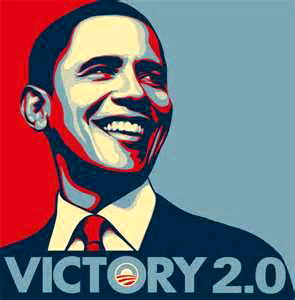
VictoryIt took Obama through the first presidential debate on Oct. 3 to recognize he would have to get down in the trenches if he wanted to win re-election, but once he got dirty he took Romney to task and never gave the man a chance to breathe.

After Romney wrote off “47 percent of Americans,” told us about his “binders full of women,” and generally dismissed minority and middle class voters, Obama secured a crushing victory in the Electoral College.

But the outcome remained in doubt well into election night, because statistically it was a dead heat. This campaign tugged at the very fabric of America, with half the country pulling and tugging against the other half.

In terms of news coverage the election was the story of 2012.

Obama had stopped the blood loss caused by Bush and Cheney, and had the country moving in the right direction. You either believed in the “Affordable Care Act” and that the recovery should flow through the middle class, or there was Romney’s vision for America, that saw the wealthy being taken care of first, corporations second, and the belief that increased revenues would trickle down to the rest.

Considering how fragile the economic recovery has been up to this point, a Romney win could have crippled the United States for generations to come.

Again, THANK YOU Bill Clinton for your speech!

Interestingly, with the immediacy of social media, an ancillary benefit to the presidential campaign was that it functioned somewhat like a “feedback” feature on a Web site – both candidates raced to respond first to anything that happened domestically or internationally, as neither wanted to misjudge what might register with voters.

This gave people a voice and the chance to get direct feedback from the two guys at the top of the food chain. Unfortunately there was plenty of grief needing to be discussed

*     *     *     *     *

So a chaotic economic situation, paralleled by an aggressive brand of partisan politics kept America on edge for most of 2012. That is one kind of chaos. Now let’s take a look at another – violence. For in 2012 violence grabbed headlines month after month right along with the presidential campaign.

Whether man-made or Mother Nature, both cut a wide path of pain and destruction through the year. I suppose there may still be a few holdouts that question whether climate change and global warming are real, but those holdouts have dwindled as extreme weather events and dramatic temperature shifts have become the new normal.
The remains of West Liberty after the EF3 tornados hit in March.

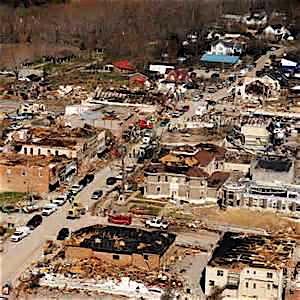
The remains of West Liberty after an EF3 tornado hit in March.

Locally, a cluster of tornadoes hit Morgan, Johnson and Lawrence counties in the eastern portion of Kentucky on March 2, packing winds of up to 140 mph and killing 23 people. The town of West Liberty was reduced to rubble.

This was an extreme weather occurrence, but a more subtle atmospheric condition began to take shape around the same time. The 2011-2012 winter was one of the mildest in recent memory. There was limited snowfall, so once spring arrived there was insufficient snowmelt to feed our water system.

This mild winter then turned into the warmest year on record. The 2012 North American Drought covered 80 percent of the contiguous United States with at least abnormally dry conditions. It’s not sexy, but the overall economic impact is on track to become one of the costliest natural disasters in U.S. history.

Two huge hurricanes provided an ironic bookend to the drought.

First, on August 28, the eve of Hurricane Katrina’s seven-year anniversary, Hurricane Isaac blew into the Gulf Coast, packing sustained winds of 80 mph, a storm surge of 11 feet, and damages of $2.3 billion; nine people were killed.

Two months later, on October 29, right before Halloween and the Presidential Election, came Superstorm Sandy. It was the largest Atlantic hurricane on record, spanning 1,100 miles, from Maine to Florida, and as far west as Wisconsin, impacting 24 states.
Coastal damage from Superstorm Sandy.

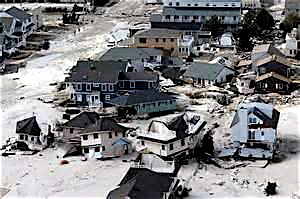
Coastal damage from Superstorm Sandy.

At its peak intensity Sandy was a Category 2 hurricane. It decreased to a post-tropical cyclone with hurricane force winds by the time it came ashore around Atlantic City, NJ. Sandy remained plenty potent as it brought sustained winds of 110 mph, with gusts of 140 mph, and a storm surge of 13 feet, that flooded streets, tunnels and subways.

At least 253 people were killed along its path in seven countries, and damages are estimated to cost over $65 billion. Areas in New York City, particularly Queens and Staten Island, along with the coastal regions of New Jersey were hit the hardest.

Sandy was the second most costly hurricane in U.S. history next to Katrina.

Then, on Christmas Eve a powerful winter storm dumped 15 inches of snow across Arkansas, leaving more than 200,000 residents without power into the new year. Up to 20 inches of snow fell in the Adirondacks of New York, and 7.5 inches in Indianapolis. Nationwide at least 17 people were killed as a result of this storm.

Interesting how many extreme weather records have been set over the last few years; coincidental, probably not.

We as people are ultimately responsible for much of this destruction.

Drought and famine will be the practical reality of unchecked climate change.

Drought and famine will be the practical reality of unchecked climate change.

We might not have pulled the trigger, Mother Nature provided the storms, but we continue to build in places that were never intended for development and are susceptible to natural disasters; we allow corporations to pollute our lands and waters, which erodes valuable eco-systems that were intended to protect our coastlines; and we pump millions of metric tonnes of carbon dioxide into the atmosphere yearly, warming our land and seas.

Out of an insistence for convenience, to cut costs and maximize profits, we disrespect our environment and our fellow man. As a consequence, recently, nature has been striking back at humanity with a great vehemence.

An even more disturbing brand of violence on display in 2012 was the prevalence of human-on-human carnage.
The death toll in Syria's two-year civil war continues to climb.

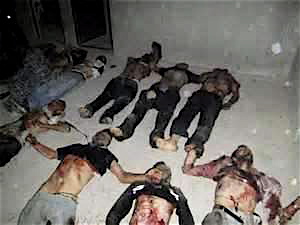
The UN estimates the death toll in Syria’s two-year civil war has passed 60,000.

Abroad, Syria’s civil war claimed the lives of approximately 39,520 people in 2012, with no let up in sight. This was a hotly discussed topic in the presidential election, as officials are estimating a possible 100,000 people could die in 2013.

In Afghanistan another 295 U.S. troops perished.

A continuing headline that also made for a hot potato topic in the presidential election was the attack on the U.S. Embassy in Benghazi, Libya on Sept. 11. Four Americans died, including Ambassador Christopher Stevens.

Two incidents from 2011 that remained headline news were adjudicated in 2012.

On June 11, Jerry Sandusky, the 68-year old disgraced former assistant football coach at Penn State was found guilty on 45 of 48 counts against him, and sentenced to 30-60 years in prison as a serial child molester.

Additionally on August 24 Anders Behring Breivik was found guilty for his murder spree in Norway. Breivik, 33, bombed government buildings in Oslo on July 22, 2011 killing eight, then carried out a mass shooting at a Workers’ Youth League camp, murdering 69 people, mostly teenagers, and injuring 242. Breivik was sentenced to a term of 21 years with the possibility of extension for as long as he is deemed a danger to society.

Disturbed Ph.D. student James Eagan Holmes entered public consciousness on July 20, when he opened fire at a midnight screening of the new Batman film, “The Dark Knight Rises,” in Aurora, Colo. Dressed in tactical gear, Holmes, 25, deployed a smoke device to obscure the vision of those in the theater, then killed 12 people and injured 58 others. Interestingly Holmes allowed himself to be taken into custody, so perhaps we will gain a glimpse into why this mass shooting transpired.

On August 5, Wade Michael Page, 40, a white supremacist, shot congregation members at a Sikh temple in Oak Creek, Wis., killing six people and wounding four. Page was shot by police and then took his own life.

This was followed by Jeffrey T. Johnson, 58, who killed a former co-worker outside the Empire State Building in New York City on August 24. Stray bullets wounded nine bystanders as police fatally shot Johnson.

There were others that grabbed smaller headlines: Four were killed in an Atlanta day spa in February; seven killed at a Oakland religious college in April; five killed at a Seattle coffee shop in May; and six killed at a Minneapolis sign company in September.
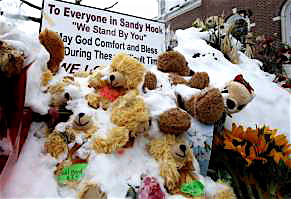
A teddy bear memorial in the snow marks the pain continuing to be felt in Newtown, Conn.

A teddy bear memorial in the snow marks the pain continuing to be felt in Newtown, Conn.

This all set the table for the horrific massacre on Dec. 14 in Newtown, Conn., when Adam Lanza, 20, killed his mother at their home, then entered Sandy Hook Elementary School and fatally shot 20 children and six adults before killing himself. This was the second deadliest school shooting in U.S. history after the Virginia Tech massacre in 2007.

Fear not, there was still time to squeeze in one more barbaric shooting episode before year-end.

In Webster, NY, on Lake Ontario Beach, four fire fighters were ambushed on Christmas Eve, leaving two dead while responding to a call. Gunman William Spengler, 62, intentionally set fire to his home and car in order to lure the first responders. Seven homes were destroyed before Spengler killed himself.

Add to this that Chicago witnessed 506 murders in 2012; the first time since 2008 it had exceeded the 500 mark. This was a 16-percent increase over 2011, much of it the result of gang violence.

I still think the presidential race took top honors for story of the year nationally due to its long-term implications, but the blatant disregard for human life was a close second.

*     *     *     *     *

In the discouraging yet not terribly surprising category comes the flaming downfall of celebrated cyclist Lance Armstrong. Accused of doping after recovering from testicular cancer and winning an improbable seven consecutive Tour de France titles between 1999-2005, Armstrong denied using banned substances, but in June the U.S. Anti-Doping Agency issued a lifetime ban against Armstrong for his use of illicit performance-enhancing drugs. In October the Union Cycliste Internationale agreed by disqualify all of Armstrong’s results after August 1998.

Again, not shocking, but what a fall from grace.

There were positives in 2012:

Isabella sporting her blue and white for the UK/U of L game on Dec. 29.

Isabella sporting her blue and white for the UK/U of L game on Dec. 29.

Here in the Bluegrass State, home to one of the greatest traditions in college basketball, we were treated to the University of Kentucky and the University of Louisville both making the Final Four and playing each other in a historic clash. Kentucky won that game 69-61, and went on to win its eighth national title in April, and first for head coach John Calipari, with a 67-59 win over the Kansas Jayhawks in New Orleans.

Celebrated UK center Anthony Davis broke the record for blocked shots by a freshman, and led the NCAA in blocks. As a result Davis received every major honor possible in college basketball, including: First Team All-American; Freshman, Defensive and National Player of the Year honors; and NCAA Tournament Most Outstanding Player.

On June 28 Davis was selected first overall in the 2012 NBA Draft by the New Orleans Hornets, followed by UK teammate Michael Kidd-Gilchrist at the No. 2 spot. No single college team had previously delivered the overall No. 1 and No. 2 picks. Then in July Davis was selected as a member of the USA’s soon to be gold medal Olympic basketball team.

That was a pretty sweet freshman year, and enjoyable to watch, as were the London Olympics in July and August. England was visually stunning and NBC did a great job of providing coverage. Michael Phelps and Missy Franklin ruled the pool; U.S. women’s gymnastics won gold; Usain Bolt defended his gold medals in the 100m, 200m and 4×100; and Misty May-Treanor and Kerri Walsh took gold for the third time in a row in beach volleyball, along with an epic closing ceremony made the London Olympics a must watch.

This was good stuff – positive. Obama winning, that was a positive step, a sign, that there was a will to take action and make our collective tomorrow better than today.
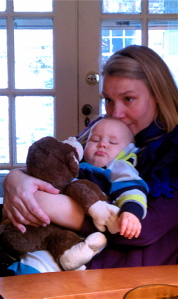
Baby is wiped out after a big Christmas morning.

Isabella is wiped after a big Christmas morning.

In the midst of all the ugliness came encouragement, and that was something I was looking to find, because my personal number one event of 2012 was my daughter, Isabella Naomi Langley-Wilson being born in April.

She is a sweet soul, with a smile that warms my heart. I can’t imagine life without her. Her mom, Maia, has been a blessing to me and the baby – and her two boys, Gabriel, 9, and Jacy, 8, have been so great with their new little sister.

Fatherhood is its own special brand of chaos, but one I welcome. Instantly I’m less cynical and more optimistic about the state of the world, and am actively seeking out leaders who are willing to take bold, innovative, and positive steps forward.

We need change. It might be scary for some. The unknown tends to be that way, but I want to do whatever I can to ensure the world is better off tomorrow for my daughter.

This was a contentious year for many reasons, ugly and violent, so I’m happy to pull the covers over 2012, tuck it into bed and say goodnight, for I am ready for a new beginning and hopefully a more peaceful 2013.

Posted in Events, Family, News, Reviews | Leave a comment

Justin Cronin’s “The Passage” Shakes the Foundation

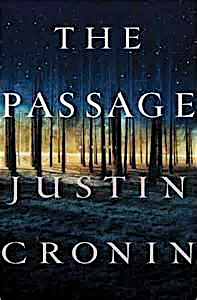
The PassageThis book was published in 2010, debuting at #3 on the New York Times best-seller list, and is part of a trilogy that is still being written.

The Passage” takes a look at the fall of civilization after scientists and the military are unable to contain test subjects who have been infected with a highly contagious virus from a species of bat in South America.

The intent was to develop an immunity-boosting drug. Instead a vampire-like creature was unleashed.

I say vampire-like because in “The Passage” there are blood-sucking monsters lurking in the dark, but author Justin Cronin didn’t write this book with Dracula, Interview with a Vampire, or certainly Twilight in mind.

This is much more gruesome and real.

What initially caught my eye was Cronin graduated from the University of Iowa Writers’ Workshop – my old school, and home to the premier writing program in America.
Then I started reading the plot line, and was intrigued by how diligently Cronin dissuaded interviewers from characterizing this as a vampire book.

Clearly similarities exist between vampires and these creatures known as “virals,” but they are more a hybrid, a combination of the fury found in werewolves; the detached sickness seen in zombies; and the unquenchable thirst for blood exhibited by vampires.

The story begins in 2014, when scientists travel to South America to locate a species of bat they suspect possesses a virus that will boost human immune systems. The U.S. military funded the project and sent along soldiers for protection, but the bats attack in waves after being discovered, overwhelming the military.

Most on the expedition die from a form of hemorrhagic fever, but two survive, and are brought back to a top-secret lab where the U.S. government begins experiments under the name of “Project Noah,” in an effort to refine the virus.

At first homeless people are used as test subjects but they are so crippled mentally that they are not a reliable source, so the next step is selecting 12 death row inmates, men who are going to be killed anyway, who have no family or attachments left alive.

Cronin goes into some detail about these men, and the strange task two FBI agents share of having to recruit the various prisoners necessary to sign off on becoming test subjects. The trail of each man is slowly erased from existence, until they are all declared dead and brought back to the secure lab in the mountains of Colorado.

Each prisoner is infected and turns into one of these fearsome creatures, with fangs and claws, like a coiled muscle waiting to pounce. They hunch in the shadows waiting…

Interestingly, a silence crept over the camp where Project Noah was located. Gone was the gallows humor, joking and boasting most soldiers used as a coping mechanism to offset the stress in such a tense environment.

The virals possess an ability to infect peoples’ minds with their thoughts, and being these were all death row inmates, their thoughts are not particularly pleasant. Sleep becomes difficult for the soldiers and doctors as the virals poison their dreams, pushing the fatigue factor, and making it easier for the virals to gain control of their minds.

The Girl from Nowhere.

The Girl from Nowhere.

In the meantime the decision is made to try the synthesized virus on a young person. We follow the path of a six-year old girl, Amy Bellafonte (The Girl from Nowhere), who is left at a convent by her struggling mother.

Amy is exposed to a refined version of the serum that was administered to the 12 original inmates, and remains human but picks up an ability to hear and speak with the virals through telepathy.

Once the virals take mental control of the guards, they escape their quarantine cells and quickly kill all in their path. Amy is assisted in escaping by the FBI agents who initially captured her, along with Sister Lacey, who took Amy in at the convent after her mother had left.

One of the agents and Amy head to an old cabin in the mountains, and find safety there, occasionally hearing news of the spreading virus. Eventually the agent succumbs to nuclear fallout, as a human apocalypse ensues between the virals and man.

Amy moves on from the camp after that and lives with other survivors, but they always die, as the virus has slowed her aging process and greatly extended her life.

The story flashes ahead 93 years to an isolationist colony in California of nearly 100 people living at the foot of a mountain behind high walls.

Amy arrives one day appearing to be around 15-years old. This coincides with a break-in at “The Colony” by several virals and Amy is severely wounded by a crossbow. While a normal human would likely have died from such an injury, Amy’s enhanced recuperative powers allow her to heal in a few days.

With the lead viral, Babcock, already mentally poisoning “The Colony” the same way he did the guards’ minds at Project Noah, combined with Amy’s strange ability to survive in this post-apocalyptic world, colony members become suspicious and conspire to cast Amy out.

Preemptively several younger colony members decide it is time to leave this repressive society, and elect to protect Amy and depart together.

Plus there is a hint that life does exist outside the walls, as one colony member has picked up a coded transmission that is emanating from somewhere in Colorado.

Amy manages to keep the travelers relatively safe during their journey. They come across another settlement in Las Vegas that seems welcoming, but “The Haven” turns out to be Babcock’s lair, where he receives blood sacrifices in exchange for allowing the humans to survive.

After a botched attempt at killing Babcock, sympathizers at The Haven assist the colony members in escaping via railroad, and they meet up with a militia group from Texas who assists them in finding the Colorado outpost.

They discover Sister Lacey still living in the compound where Project Noah originated, and that she was infected with the same strain of the virus as Amy.

It is here that Babcock is coming. He feels Amy and knows she is a threat. Babcock and “The Many,” all his infected followers, are seeking her.

At the book’s conclusion the group’s future remains uncertain. What we do know is war is declared on the virals.

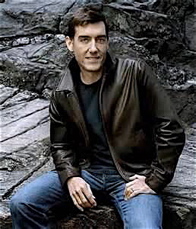
Author Justin Cronin.

Author Justin Cronin.

“The Passage” is a unique take by Cronin, ambitious in its scope and detail. The hardcover edition is a hefty 766 pages, but what I would characterize as a real “page-turner.”

I found myself stealing moments to read further into this intense adventure, then sharing the updates with my 8 and 9-year old boys, who were fascinated.

His second installment in the trilogy, “The Twelve,” was published in 2012.

“The Passage” is already slated to head to the big screen at some point. Ridley Scott, who directed Alien, Blade Runner, Gladiator, Black Hawk Down, and American Gangster, purchased the rights to the novel in 2007.

Catch it before it becomes a movie, if nothing else to enjoy the experience of having this labyrinth tale unfold inside your mind.

Posted in Reviews | Tagged , , , , , | Leave a comment

Beatles-Compatriot Ravi Shankar Passes Away

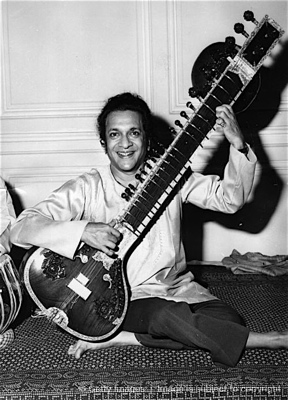
Ravi ShankarOn December 11th, world music virtuoso Ravindra “Ravi” Shankar passed away. He was a robust 92-years old.

I by no means am a huge sitar fan, but appreciate his abilities, kindness and influence.

I mainly know Shankar because of the Beatles. I was really getting into their music and personalities in 1979/1980, and that they had this Eastern meditative nuance and shift in their music that brought a more worldly flavor was an exotic consideration when growing up in Kentucky.

George Harrison was kind of the silent partner in the Beatles, and Shankar helped to ground him, which in turn helped prevent the Beatles from spinning out of control. Harrison, through Shankar, was able to give the fame and adulation facing the Beatles some ethereal perspective.

With the Peace movement in the 1960s came a tolerance for alternative musical influences. Shankar had been attempting to bridge Eastern and Western musical styles, and already had been playing with John Coltrane, but it was his collaboration with the Beatles and friendship with Harrison that catapulted him to stardom.

Two songs in particular by the Beatles stand out as examples of Shankar’s influence. The song “Norwegian Wood” from the 1965 album “Rubber Soul,” which features Harrison playing the sitar, but tuned in a more Western style so it sets the song off but remains familiar. Also “Within You Without You,” from the epic 1967 release “Sgt. Pepper’s Lonely Hearts Club Band.” This tune has a traditional Eastern flair in sound and interpretation.

Shankar also pioneered the concept of a rock benefit concert with the 1971 Concert for Bangladesh. With Bob Dylan, Eric Clapton, Leon Russell, Ringo Starr and Billy Preston helping to play two shows at Madison Square Garden, along with a three-record live recording and movie, Shankar was instrumental in helping to raise $12 million for the refugees fleeing Bangladesh into India.

[George Harrison playing “While My Guitar Gently Weeps” at the 1971 Concert for Bangladesh. The guitar battle between Harrison and Eric Clapton starting at the 3:20 mark is impressive.]

Throughout his 60-year playing career Shankar won three Grammy awards and was nominated for an Oscar for his musical score for the movie “Gandhi.” He played huge sets at the Monterey Pop Festival and at Woodstock, which greatly expanded his audience.

It didn’t matter who he was around, the Beatles, Jimi Hendrix, The Who, Jefferson Airplane, Shankar was comfortable in his abilities and command. He wasn’t trying to impress anyone. He played, and preferred not to have his music considered merely as a jam band soundtrack for drug experimentation, but also appreciated the influence his success and access to famous musicians provided.

Of late it has been Shankar’s daughters who have been the newsmakers. Norah Jones has won nine Grammy awards and sold like 50 million records, and Anoushka Shankar, who is an Indian sitar player, has twice been nominated for Grammy awards in the World Music category.

It isn’t any one thing, but Ravi Shankar’s grace and discipline raised the consciousness of Eastern philosophy and Indian culture in the United States, and that’s not a bad thing considering how hyper-local America tends to be.

Go well my friend, and be at peace.

[Ravi Shankar – “Bangla Dhun,” Concert for Bangladesh, August 8, 1971]

Posted in Music | Tagged , , , , , | Leave a comment