KY State Police & Safety Town Help Kids Learn Rules of the Road

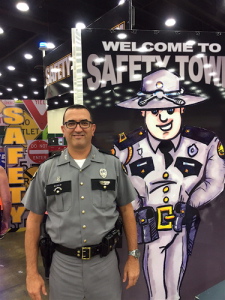
KSP Trooper William Gregory.

KSP Trooper William Gregory.

There may only be tricycles involved but you better obey the traffic laws in Safety Town, the interactive traffic safety exhibit hosted by the Kentucky State Police, located in South Wing B. This is geared toward children as a way to introduce traffic safety and to build rapport with law enforcement.

“Often the first interaction kids have with the police is during a bad situation,” said KY State Police Trooper William Gregory, from Post-15 in Columbia, KY. “Kids are part of the community and we are part of the community, and by interacting with them at an early age in a comfortable environment, we can introduce police officers to children in a positive atmosphere.”

For children around 3 ½ feet tall and under, they can enter Safety Town, where they are provided a free drivers’ license that serves as an admission ticket. Then the children sit for a brief safety talk with an officer, who crouches down to their level to help make them feel more comfortable. This discussion covers general safety guidelines, and what traffic signs and signals mean.

“Many of the children aren’t at an age where they can read yet, but we get a chance to see what they have learned already and often they understand the color red is associated with STOP,” said Trooper Gregory, who is working his 13th Kentucky State Fair.

img_0349The kids then ride off on the tricycle driving course that contains opportunities for participants to observe what they have learned by encountering STOP signs and traffic signals.

The fair is the crown jewel of fundraising for the state police and goes a long way to funding Trooper Island. This is a facility located on Dale Hollow Lake, where 600-700 kids aged 10-12 years old from low income families can come to learn skills and develop a positive mentorship with law enforcement. Approximately 1/3 of Trooper Island’s operating costs are covered by the vehicle raffle at the fair.

This rewarding opportunity to run Safety Town still makes for a long several days. It’s completely staffed by troopers that cover public affairs in each of the 16 posts around the state, combined with assistance from commercial vehicle enforcement officers. To get things set up, work the 11-days of the fair and get everything broken down requires working a 14-day stretch – but it’s worth it as the troopers are able to touch the lives of thousands of children each year.

“Safety Town is somewhere that we see grandparents bringing multiple generations back to enjoy the same learning experience they did and their parents did at the state fair from years before,” said Trooper Gregory.

#     #     #

Published by:  Kentucky State Fair blog | 08-30-15

Posted in Events, Family, Travel | Tagged , , , , , , | Leave a comment

No Vegetable Too Small Nor Pumpkin Too Large for State Fair Entry

IMG_0556Walking into a large display room full of freshly grown local vegetables and melons makes one feel healthy all over – even if you did just finish a foot-long corndog. Strolling past tables and baskets full of radiant produce adds an unmistakable smell and crispness to the air. It may be summer outside at the fair, but it seems as if autumn has arrived inside.

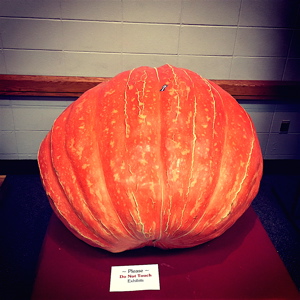
There are two h-u-g-e attractions in this showroom, and I do mean huge, that draw heavy attention each year. The Largest Pumpkin Contest winner is on display at one end of the room. This thing is near the size of a subcompact automobile. This year’s winning entry weighed in at 875 pounds, and came from Dwight Slone, of Prestonsburg, KY.

Also available for viewing is the winning entry for the Largest Watermelon Contest. For the second year in a row Frank Mudd, from Flaherty, KY, took home the cash prize with his 204 pound entry.

The 875 pound Largest Pumpkin Contest winner from Dwight Slone.

The 875 pound Largest Pumpkin Contest winner from Dwight Slone.

These are both eye-catching spectacles, but there is so much more to see here. The folks who grow all this wonderful produce work quite hard during the year to present a viable entry, and this year in particular has been a rough one due to all the dampness. Some had their fields flooded, others couldn’t weed them properly because it was so wet.

Carol Behringer, from Louisville, who is working for her seventh year at the fair guarding the veggies, said one of the aims they are trying to foster is getting younger generations involved in growing produce. There is a junior competition that can be entered, and that works great to have the young kids work along with parents or grandparents to grow and tend to whatever category they choose to raise.

“You may not win the first year, but come back and try again the next year” said Behringer. “The one way you know 100 percent that you will not win is if you don’t enter.”

#     #     #

Published by:  Kentucky State Fair blog | 08-30-15

Posted in Events, Travel | Tagged , , , , , | Leave a comment

Gentrification Binds New Orleans on Katrina 10-Year Anniversary

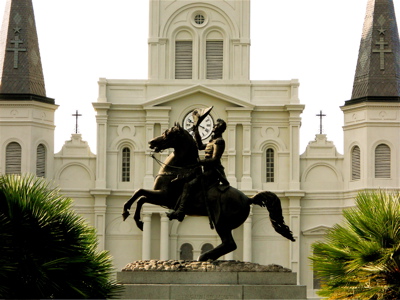
Nola 1If I had to pick a word that represents where New Orleans finds itself on this 10-year anniversary of Hurricane Katrina it would be “changed.” The city still stands and from most accounts is thriving with a new energy and vigor not evident previously.

But neither is the Crescent City the same city it once was before the storm washed away nearly 2,000 lives and countless homes. Neither is my life the same. I am a changed person because of this storm, and both New Orleans and myself travel a path through life in an alternative reality.

My wife at the time and I had been going to New Orleans for years. It was my go to place to get away from the hectic life in Washington, DC. Finally in October of 2004 we decided to move there. For several glorious months I lived on my own in a mirror-walled apartment on the corner of St. Louis & Bourbon Streets in the French Quarter, in what was a former bordello known as Chez Bourbon.

It belonged to Chris Owens, a noted burlesque performer who lived on property with her boy toy we referred to affectionately as Mr. Hair. Owens owned and operated the club that faced Bourbon Street, where she performed nightly. To say there were a few characters that lived and worked in this facility would be a gross underestimate. I got to know bounty hunters, drug dealers, prostitutes, pimps and a variety of castaways that didn’t fit the mold where they previously lived in locations far from New Orleans – all while I worked a normal day job at a prestigious law firm on Poydras Street.

My time there only lasted a few months, which was best, because I would have hurt myself had I lived there much longer. How can you not love having a “To-Go” cocktail window in your building. But this joint served its purpose as the rent was cheap, the joint was furnished and it was walking distance to work. Come late December 2004, our condo was ready for move-in and I bid Chez Bourbon farewell.

This was the first place we had ever bought. It was in an old cotton mill located in the Central Business District, with huge ceilings, exposed wood beams, giant windows overlooking the courtyard, and walking distance to the French Quarter. It was a cool spot. We lived there for seven months before Katrina came calling.

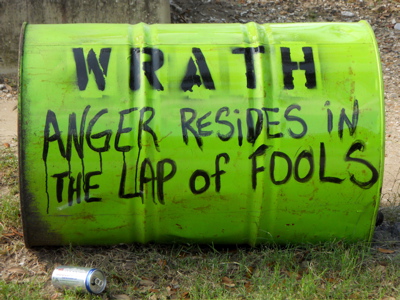
ClawhammerI will skip going into what that moment was like. Let’s just say anyone who was out at Armstrong International Airport trying to secure a rental car the day before Katrina hit will never forget the scene.

If you can imagine what it looks like when society begins to break down that was it. Decisions matter, and if you didn’t heed some caution and make an exit strategy in case things got bad, which they did, then there were consequences, and some folks did not handle that moment well.

My wife and I drove away from our home in New Orleans with our cat, Jordan, early on August 28, 2005 and headed to my parent’s home in Frankfort, KY. The counterflow plan was in effect, so all lanes on the interstate were outbound, flowing away from New Orleans. It was like some mad NASCAR scramble, with vehicles cutting across medians and ripping north.

After the levees breached and the waters rose there was a brief moment of uncertainty. Reports from the Superdome and the convention center made things seem dire. There were a few days when humanity, and law and order, were absent from New Orleans, but it returned. Of course it took the military to restore that order, but it returned.
Nola 2I rejoined my law firm colleagues the following month. We set up shop in Baton Rouge temporarily, but I was able to return to our condo during the night with a Governor’s Pass one of the partners loaned me and found our property unharmed, aside from the disgusting smell emanating from the refrigerator that had been without power for over a month. Others in our building were not so lucky.

Still, my wife and I returned to New Orleans. There was a civic sense to fight from within the city limits to bring New Orleans back, but those were hard days. Nearly 2,000 people had died. I routinely had folks in and around my office openly mourning the deaths of their family members.

You have to pause and think about that for a moment. Imagine coming to your workplace day in and day out, and having colleagues weeping grievously about missing or dead family members, combined with an executive attitude to soldier up and get back to work for the good of our clients. It makes for an other-worldly work environment. Ask the folks around New York who went through 9/11.

Most everyone also was endlessly on their personal phones daily, arguing with insurance companies about property damage and what their policies would or would not cover. People may not have been fighting for their literal lives, but many were fighting for their mental lives.

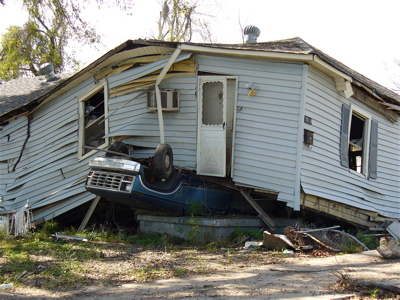
Nola 4There also was the tattered infrastructure. Going to places like the grocery store meant driving through vacant neighborhoods, past houses that had steeped in murky water for months. The eery writing of rescue workers remained scrawled across the fronts of all the houses, denoting whether people or animals were found inside dead or alive. I remember this giant radio tower was toppled across a vacant neighborhood and remained there for months. The damage was immense and inescapable.

My wife and I had been in New Orleans less than a year. We didn’t have the roots or support structure needed to anchor our presence. We were looking for something to counterbalance the disaster and couldn’t find it, so we sold our home and left New Orleans, thinking we would give our city some space to grieve and heal.

This is when my alternate reality began. We never would have left had it not been for Katrina. I had a good job, and my wife was working for the New Orleans Jazz & Heritage Festival. We were becoming part of the Big Easy. We were just finding our way and were excited to see where this adventure would go next. I was preparing to return to college and earn my master’s degree. Instead of ultimately going to the University of Iowa, I most likely would have attended LSU.

We ended up living with my wife’s family in Galena, IL for a time, and with my folks in Kentucky. We traveled throughout the western U.S. to scout different cities and universities to potentially attend and ultimately moved to Iowa City, where I earned an MA in journalism. At the same time my wife was wooed back to New Orleans in 2006 for Jazz Fest by its creator, Quint Davis, and began living there full-time for several months leading up to and after the festival.

The city was indeed coming back but was fueled by antidepressants and alcohol. By the time I graduated in 2009, I was already traveling a darker path and upon returning to a city that never sleeps, and charged with covering its nightlife activities, this was like throwing napalm on a house fire. I went en fuego.

Nola 6It surprisingly lasted a couple years, but I had to get out. My marriage was gone and I needed out of the life that New Orleans offered. I was done with super-parades, 24/7 clubs, and the attempted obscuring of a deep-rooted depression behind the faux-happiness of a smiling mask. Yes the Saints did win the Super Bowl in 2009, but that was just another excuse to consume.

I returned to Kentucky, this time by myself. Now I can’t say whether I would still be married had Katrina not hit, but it put a chain reaction in motion that was not in my playbook otherwise. This isn’t necessarily a bad thing, as I’m surrounded by people I love today, and I have a family that I wouldn’t have otherwise.

Similar for New Orleans, it is back and better than ever in many ways, but it’s different. This historically black city is much whiter now, as more than 100,000 former African American residents are scattered across a variety of U.S. cities. White millennials have brought an energy and a vibrancy to New Orleans that wasn’t here pre-K.

Some came to renovate and rebuild the old houses, others came with their Do-It-Yourself attitudes and entrepreneurial spirit and began new businesses that are flourishing.

No doubt it’s tough being 20-something in America these days. They are the hardest hit generation by the current economy. The older workforce is continuing to work instead of retiring, so jobs are hard to come by, even for those who are college educated. Others in their 30s hit glass ceilings because of gender, sexual orientation, race or lack of seniority. Both these groups are examples of who inhabit the renewed Crescent City.

They have come to a place where they feel they can become a part of something and rise actually based on hard work. With these folks has come a healthier lifestyle embraced in northern cities like vegetarian food options, regular exercise, yoga and other health-conscious choices. Those are all now being woven into the fabric of New Orleans.

Don’t get me wrong, New Orleans is still a debacherous locale, it just has a vegetarian option that wasn’t available pre-K.

That vegetarian option means far more than just having a health alternative. It depicts a shifted demographic living in the city.

It’s great that you can see folks out running and biking in the streets, which you didn’t see much pre-K, but the new inhabitants from the north also brought their money. They came down and bought up housing in what were developing neighborhoods like the Marigny and Bywater. Where previously these were thriving artist communities mixed between white and black, now they are all white because home prices have skyrocketed.

New Orleans is meant to be a mixing bowl of races, creeds and collaborations. Neighborhoods spill out around the bending Mississippi River, where previously folks found their way into all the different niches and crannies. If you price out the old families that have lived on the margins for generations, if you price out the musicians who hop sets with different bands all week, and the restaurant workers can’t afford a spot and the artists can’t afford studio space, then New Orleans begins to become like Disneyland.

No one wants to hear cover bands playing “Drop Me Off In New Orleans” nor do you want people from the Midwest making their interpretation of what gumbo used to be. Most other American cities are already homogenized, selling the same stuff that can be found everywhere else. That isn’t New Orleans. It may be a hot mess, but it is an original hot mess, full of unique independent small businesses and it would be a tragedy to see all this rebirth of prosperity, only to have the city’s identity lost as a consequence.

New Orleans already was a city in decline before the storm. Many things needed to be changed because they were not sustainable in the way they were being addressed previously. The public school system is a great example.

Nola 7On this 10-year anniversary I worry for my former city and her residents. There are many positive changes, but she seems like a bit of a lost soul. For those that lived on the margins before Katrina, it’s likely this supposed new positivity hasn’t found its way to you yet. Go look in the Lower 9th Ward. Aside from the great work guys like Brad Pitt have done, such as with his Make It Right Foundation, many areas still appear as they did in 2005. Lots where former homes sat are overtaken by weeds, and across the city crime remains rampant because opportunity is a distant hope.

It’s like a decision has been made to marginalize the original residents and hold them off of this new found prosperity, which is the same thing engineers are trying to do with the water that ultimately seeks to overtake New Orleans.

A glistening new levee system has been built in the wake of Katrina and it sounds impressive. But in the last 80 years, Louisiana has lost 1,900 miles of its coastal wetlands. That’s an area roughly the size of Delaware, and was the state’s natural defense system to approaching hurricanes.

An ambitious master plan has been devised to protect this area, but it comes with a hefty 50-year, $50 billion price tag. Part of that amount is earmarked to be funded with money from the recent $18.7 billion that BP is having to pay Gulf states for its oil spill disaster, but I find it doubtful Congress is going to be interested in funding much of the remaining amount as it would have to be shouldered by tax payers.

New Orleans finds itself as a guarded city behind storm walls and levees – on paper ready to protect itself from a 100-year storm. Remember Katrina slowed down before making landfall east of New Orleans in Mississippi. The disastrous aftereffects that occurred were the result of a glancing blow. Imagine what would have happened had the hurricane hit the city directly.
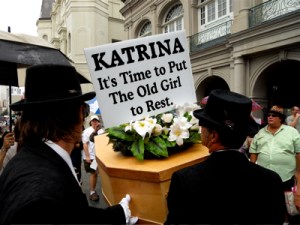
Nola 5Officials are correct to be seeking additional funds to further build water defense systems, because New Orleans, like Miami, Galveston and Lower Manhattan, need to be ready for unthinkable storms that were considered to happen maybe every 300 to 500-years before, but are sadly imaginable in the near future.

Unfortunately America generally is a reactionary populace. Convincing folks to fund precautionary storm efforts, or conservation initiatives in conjunction with global warming and climate change, are very challenging in our current polarized political climate.

I wish New Orleans well, and on this anniversary I hope the cocktails are flowing liberally, the brass horns are ringing out across the city and folks are out dancing in the streets. There is reason to celebrate – just keep one eye on that rising water.

Posted in Events, Family, Food, Liquor, News, Politics | Tagged , | Leave a comment

Raptor Rehab Returns Birds of Prey to Wild

Aquila taking in the fair sights at the Raptor Rehab booth.

Aquila taking in the fair sights at the Raptor Rehab booth.

Saturday at the Kentucky State Fair means it is Eagle Day again. On the first Saturday and this past Wednesday, a volunteers from Raptor Rehabilitation of Kentucky brought Aquila, a 22-year old Bald Eagle and Shawnee, a female Golden Eagle who is 13, to the fair for viewing. One or both will be here again on the final Saturday.

Hanging out at the fair in general can be challenging for anyone considering all the strange sights and sounds, but it’s very impressive to see these majestic creatures, along with all the other owls, hawks, falcons and vultures that come on other days, sit so patiently and well-behaved.

If you want to see a real raptor rock star, check out EO, a Turkey Vulture, who has his own Facebook page.

The mission of Raptor Rehabilitation of Kentucky (RROKI), which is run by Executive Director Eileen Wicker, is twofold. One is to take care of sick and injured birds of prey, and to get them ready for release back to the wild. Its other mission is education based, to get teachers involved and have RROKI staff give presentations in classrooms, businesses and corporate environments, where some of these magnificent birds can be showcased.

Kentucky is mostly a rural state and 20 years ago many farmers would shoot a Red-tailed Hawk if they saw it on their property. Flash ahead to now, and educational efforts from organizations like RROKI have brought about dramatic changes in attitudes.

Chris Allmän with Sade, a Harris Hawk.

Chris Allmän with Sade, a Harris Hawk.

“We give farmers and others a chance to see these birds up close and in greater detail so they gain an appreciation of these animals,” said Chris Allman, a spokesman with RROKI. “Now it’s a win-win, farmers are happy to see Red-tailed Hawks hanging around and the birds are pleased to feast on the array of small creatures that come running out when the fields get harvested.”

This is the 25th year Raptor Rehab has appeared at the Kentucky State Fair, and it is the organization’s biggest fundraising and recruitment opportunity. It’s not every day that one can stand across from a Bald Eagle that isn’t in a cage. Through t-shirt sales, other merchandise, donations and folks who sign up to become future volunteers, the fair is a fantastic outreach tool for these birds.

“The Bald Eagle is our national symbol and that is very important to veterans and other military personnel, so they respond by coming out to see them,” said Allman. This relationship between RROKI and veterans groups has resulted in a successful partnering with the Wounded Warriors program.

Fundraising is a critical aspect of Raptor Rehab’s ability to care for its patients. There are around 25 birds that are permanent residents, due to an inability to fend for themselves in the wild, and up to 130 temporary residents during the busiest summer months.

“Social media is really helping,” said Allman. “We can widely disseminate our message and people respond to assist with transporting wounded birds, which saves on time and gas.”

Grace.

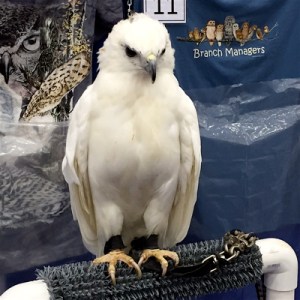
Grace, a leucitic Red-tailed Hawk.

The number one cause of injury seen to the birds is getting hit by cars. Raptor Rehab’s overall success rate for getting them recovered and released back into the wild is about 60 percent.

One permanent resident I met was Grace, a leucistic Red-tailed Hawk. Usually they are brown in color, but her genetic aberration makes her white, which is unique. Grace was seen in the Jefferson Memorial Park area for more than 15-years, but was unable to hunt on her own anymore and had fed on a dead carcass that was contaminated with lead shot.

About 50 percent of all the vultures and Bald Eagles admitted to Raptor Rehab have lead poisoning. Grace came to Raptor Rehab last January with lead readings off the charts and a wicked case of arthritis. She has since recovered nicely, and is making her first state fair appearance this year.

With only one paid staff member, it takes approximately 25 volunteers to handle everything required to keep Raptor Rehab functioning. In addition to recruitment and the necessary fundraising, training is especially important, because one can’t just walk in an enclosure with birds of prey and hope for the best.

Soren the Barn Owl.

Soren the Barn Owl.

Handling these birds, giving them meds, cleaning poop from their living environments or conducting educational programs all take significant training in order for volunteers to get up to speed. Everyone has their own strengths, and RROKI tries to identify those and apply people to what they do best.

Volunteering can be tough work, but it’s a labor of love for many. They are out in heat, cold and rain often, and these are wild animals who don’t necessarily know that staff are trying to help them. You will get hurt. Puncture wounds are common. The big birds are incredibly powerful and pick up on vibe like you wouldn’t believe. Confidence, dexterity and the ability to read situations go a long way to helping staff limit their exposure to injuries.

“It’s such a privilege to work with these animals, to get them healthy and do releases back into the wild – to see the look on the faces of the volunteers and sponsors who helped make that happen,” said Allman.

#     #     #

Published by:  Kentucky State Fair blog | 08-29-15

Posted in Events, Family, Food, Liquor, Travel | Tagged , , , , , , | Leave a comment

Seed Art from Daviess County Shows Students Harvesting their Best

IMG_0645Superintendent Owens Saylor, with the Daviess County public schools, spent over 340 hours visiting classrooms during the 2014-15 school year to observe the conditions of the classroom and ensure the necessary nutrients were available in terms of learning tools, for students to flourish and produce the best growth opportunity.

This initiative was termed “Conditions in the Soil,” as a way to compare how crops more easily reach their growth potential when they are planted in a rich and fertile growing environment – similar to how students can increase their learning when given the necessary tools.

The opening day theme for the Daviess County 2015-16 school year was “DCPS – Harvesting the Best,” to make a point of acknowledging their talented instructors and students.

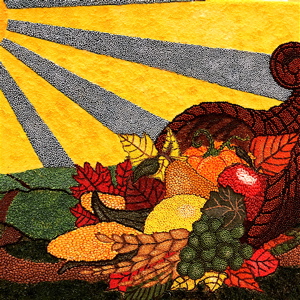
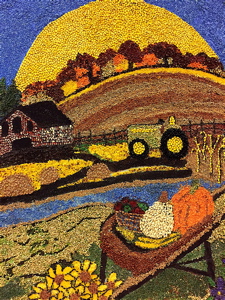
IMG_0638This tagline tied in nicely with an agricultural art project the students designed and produced for the festivities surrounding the new school year, entitled “Seed Art.” Local farmers and businesses donated seed samples of all varieties for the students to utilize in constructing colored landscape images, still life settings, and scenes from the farm – all made out of seeds.

The “Seed Art” project represents Daviess County’s rich agricultural history and the success and potential growth for students in their county schools when “Conditions in the Soil” are at their highest level.

Come check out the “Seed Art” images in the Field Seed & Grain section of the West Wing Hall.

#     #     #

Published by:  Kentucky State Fair blog | 08-29-15

Posted in Events, Travel | Tagged , , , , , | Leave a comment

Get a Tote Bag with a Side of Healthcare at the kynect Booth

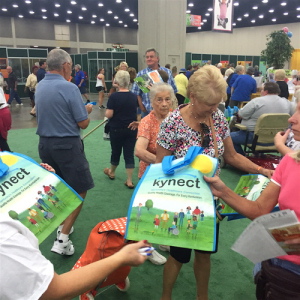
IMG_0511Tuesday was Senior Day at the Kentucky State Fair, and tens of thousands of individuals age 55 and above came by the busload to the fairgrounds to take advantage of the $1 admission available. It’s a great day to observe parents, grandparents and grandchildren wandering the grounds together through all the attractions the fair has to offer and enjoying the fantastic weather.

Nowhere is the senior crowd more noticeable than in South Wing B at Health Horizons, where the Cabinet for Health and Family Services, KentuckyOne Health, Humana, and a variety of other healthcare-related organizations are set up to answer questions and offer free health screenings. The senior population loves their healthcare and they are a savvy, well-informed bunch about all issues surrounding access to care.

One of the busiest stops in this concourse is at the kynect booth. Returning for its third year in a row, the Kentucky Health Benefit Exchange is the locally grown version of Obamacare, referred to as kynect. Unlike a majority of the states, Kentucky does run its own health exchange, and has been one of the national leaders in helping people to access affordable healthcare.

With more than 500,000 Kentuckians enrolled in plans through kynect, there is rarely a dull moment for staff or assisters who work the Exchange’s booth at the fair. The Affordable Care Act is a politically polarizing topic to some, particularly in a red state such as Kentucky, but criticism is not something heard often at the fair. The comments are mostly all positive, as generally three out of every four enrollees had no health insurance prior to signing up with kynect.

img_0518Many simply want to pass along a heartfelt thank you for having gained health coverage. Before passage of the Affordable Care Act, those with pre-existing conditions could be denied coverage by insurers or charged considerably higher premiums. That is all gone now, and for those without other options for healthcare their eligibility with kynect is based upon income and family size. The vast majority of those who apply are eligible for some level of payment assistance, special discounts or even free coverage.

In only two years, the benefits of kynect are already noticeable. According to a Gallup sampling released this month, the Commonwealth has seen an 11.4 percent decrease in its uninsured rate, falling from 20.4 percent in 2013 to just 9 percent in the first six months of 2015.

It is positive indicators like that and an ever-growing number of enrollees that drives a steady stream of traffic to the kynect booth at the fair. That and a really nice tote bag.

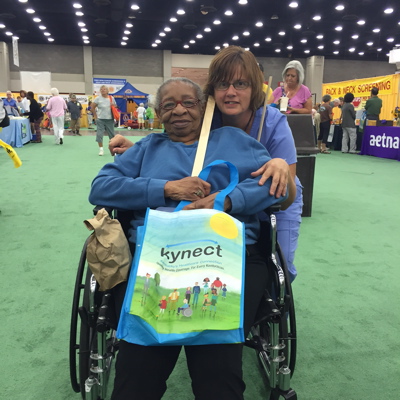
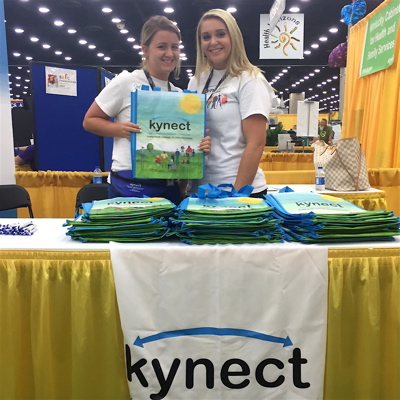
Part of any successful outreach campaign is getting your message out, and since 2013 the primary giveaway item utilized by the Exchange is a branded tote bag with kynect scenery on both sides in vivid blue, with a bright yellow sun, and its call center phone number and Web address on the side panels.

This item has been extremely recognizable at the fair for three years running. Walk out on the Midway and it’s hard not to see these bags on peoples’ arms and hanging from baby strollers. With so many free trinkets and items to purchase, a good bag to put it all in comes in handy.

kynect staff members Shelby Warren, left, and Jasmine Hall, working the health exchange booth at the 2015 KY State Fair.

kynect staff members Shelby Warren, left, and Jasmine Hall, working the health exchange booth at the 2015 KY State Fair.

In 2013, staff distributed 23,000 bags before plans or pricing for the health program were even known. In 2014, that number was surpassed, as 26,000 totes were given away. This year at the fair, kynect brought along their new digital charging station. It allows visitors to plug-in up to 10 digital phones or other electronic devices, and re-charge them in 15-20 minutes. While waiting, folks can take a digital picture of themselves, and upload it to Facebook or send it to their e-mail.

In terms of tote bags, prior to Senior Day more than 16,000 of the 22,000 bags that had been delivered to Health Horizons prior to the fair beginning were already distributed. They’ve gotten a resupply since then, so there is no worry about running out, but things look positive for kynect to break its distribution record once again. That’s a result they hope to emulate with enrollees in their health plans when the 2016 Open Enrollment Period begins on November 1, 2015.

#     #     #

Published by:  Kentucky State Fair blog | 08-28-15

Posted in Events, Family, Food, Liquor, News, Politics, Travel | Tagged , , , , , | Leave a comment

World War II Veteran, Charlie Dyke, Gives Back with Handmade American Flags

Charlie Dyke, at the 2015 Kentucky State Fair in Louisville.

Charlie Dyke, at the 2015 Kentucky State Fair in Louisville.

It was Military Appreciation Day Sunday at the Kentucky State Fair, and I would be remiss in not mentioning a chance encounter I had with Charlie Dyke, one of a dwindling number of World War II veterans remaining in America.

Charlie’s wife, Edie, was one of the judges in the quilting competition at this year’s state fair, where more than 400 submissions in 50-plus categories were entered, and Dyke accompanied his animated spouse on their trip from Toledo, Ohio to Louisville.

“We love coming to this fair,” said Dyke. “The people are just great, all the volunteers work so hard – I just hope we get invited back for next year.”

Born in Columbus, Ohio in 1924, Dyke grew up in the Springfield/Dayton area and entered the Army in 1942 at the age of 18. This first took him to Alabama for basic training, where Charlie said it didn’t matter if it was chow time or we were hitting the latrine, they ran us up a hill to get there.

After that he took a circuitous train ride to Newport News, VA, and hopped aboard the USS West Point for a speedy seven day voyage to Casablanca (French Morocco). Once deployed, Dyke saw action in North Africa, Italy and France with his engineering outfit, who were charged with disarming and removing explosives.

Their most dangerous task was finding the tricky spots where booby-traps might be hiding. Of the 250 men in his original company, Charlie stated that only five survived.

“You don’t forget about this stuff and that’s why you don’t talk about it with your kids,” said Dyke.

Charlie carries around a reminder of the war in his left leg, where a piece of shrapnel still resides, but it’s never slowed him down. Dyke is a mover, like the Ford Mustangs he loves. The growl of these classic American muscle cars, and the speed they possess is something he admires. Dyke has owned and restored a few, but at 92 he leaves the driving to Edie these days.

“She can hardly see over the wheel, but we’ve got 128,000 miles on our 2011 Honda CRV,” said Dyke.

Charlie was cruising in a new black, light-weight wheelchair when I met him in the East Hall of the Kentucky Exposition Center, but not even that prevents him from getting around. Wearing a bright red Ohio State national champs shirt from the Buckeye’s victory last season and a dark blue baseball cap with WWII emblazoned in gold across the front, Dyke’s clear eyes stood out and remain sharp, like his wit and memory.

After the war concluded Dyke discovered he had a talent for working with boilers & turbines, and ended up staying in that trade for 57 years professionally as a stationary engineer, mostly for a power company in Ohio.

He even found a way to extend his professional life. After his first wife passed away from a lengthy illness in 2001, Dyke went out to Yellowstone Park in Wyoming, home of the famous “Old Faithful” geyser, to seek employment in this wilderness wonderland.

This is how he met his current wife, and they’ve been married now for 10 years. She worked in the lodge cafeteria, and upon arriving at Yellowstone, one of the two job options for new hires was in the lodge eatery.

“I worked at the lodge cafeteria for three weeks making sandwiches,” said Dyke. “You had to work a minimum of three weeks before they would transfer you, then I got to work on boilers again, or tea kettles as I call them.”

These days Charlie spends his time pursuing a newer passion – crafting quilted American flags. He made his first quilt at 80 years of age. Now he has four antique sewing machines and uses a bargello technique to re-create the Stars & Stripes that gives his flags an illusion of being in motion. He does 15” and 18” versions and offers the crafted flags as gifts to those people fortunate enough to get to know Charlie. It’s a way for him to give back and show his patriotism for a country he loves.

“I’ve never sold one of my flags or taken money to make one or ship them – It’s just something I’m happy to do,” said Dyke.

#     #     #

Published by:  Kentucky State Fair blog | 08-24-15

Posted in Events, Family, Food, Liquor, Travel | Tagged , , , , , , | Leave a comment

Quilts at KY State Fair Celebrate Life, Love & National Championships

The Kentucky Heritage Quilt Society Award Winner by Anne Marie Miro.

The Kentucky Heritage Quilt Society Award Winner by Anne Marie Miro.

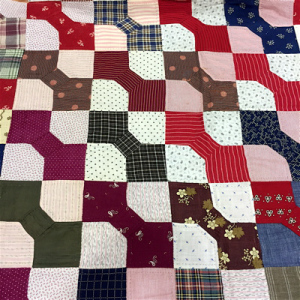
The traditional craft of quilting has steadily been on the rise in popularity for decades now, and some of the best and most unique examples of yesterday’s styles mixed with today’s contemporary designs can be found in the Textiles Exhibit at the 2015 Kentucky State Fair.

Put simply a quilt is composed of a top, a back, with bedding in between, and is accented with decorative stitching. That is where the specifics end and a world of infinite choices begins.

From design and materials, to colors and themes – the options are endless. Walking through the recently hung quilts in the East Hall one can see births celebrated, remembrances to loved ones departed, national championships won, seasons and holidays commemorated, even race horse American Pharoah was honored for his Kentucky Derby victory and subsequent winning of the Triple Crown.

“We are quilt addicts over here, and we don’t want a cure,” said Susan Hoferkamp, superintendent of the Textiles Exhibit.

To the left is the Best in Show winner from Gwen Receveur. To the right is the top machine embroidered entry by Glynnis Ballou.

To the left is the Best in Show winner from Gwen Receveur. To the right is the top machine embroidered entry by Glynnis Ballou.

With more than 400 quilts entered in 50-plus categories, much in life is being celebrated at this year’s exhibit – too much for any one judge to administer.

“The Kentucky State Fair is different from any other competition either of us have judged, including other state fairs, due to the size of the competition,” said Linda Luggen, one of the quilting judges.

“We have a system when there are this many quilts to judge – we split the overall number up between the two of us,” said Edie Dyke, the other judge who traveled from Toledo, Ohio to participate this year.

First the various award categories are set, then winners are chosen in each category.

Judges Linda Luggen, to the left, and Edie Dyke.

Judges Linda Luggen, to the left, and Edie Dyke.

The judges convene with the winning entries, then move through an elimination process until overall winners are selected and “Best in Show” is awarded.

Both judges emphasized that every entry is important and a priority is placed on personally offering direct feedback to the artists, to let them know how a decision was reached so they can work on improving their craft, and to specifically offer praise and encouragement to each quilter.

While a premium is placed on feedback, moving through all these entries requires a speedy eye, deft at noticing minuscule details, and the ability to convey their critique concisely for volunteers to notate on each quilters’ entry forms.

That takes experience, as a quilter personally and as a judge. Both Luggen and Dyke are certified to evaluate quilting competitions through the National Quilting Association. Earning that responsibility is a three to five year process.

The first thing to look for is the overall design impact of the quilt. That is a great opportunity for the judges to give initial positive feedback to the quilter. Other aspects given consideration include the piecing together of different materials to make the designs, appliqué, and edge-finishing.

"Mammy Brown's Civil War Quilt," from Barbra Gray Rolph.

“Mammy Brown’s Civil War Quilt,” from Barbra Gray Rolph.

One interesting entry this year was “Mammy Brown’s Civil War Quilt,” which came from Barbra Gray Rolph. Her great, great grandmother, Alvina R. Jupin Brown, aka “Mammy” Brown, started this quilt during the Civil War.

It was passed down through two successive generations before Ms. Rolph completed it. What originated as a purely utilitarian product has now won top honors in the “Generations” category, and is hanging aloft with the “Best in Show” winner at the Kentucky State Fair.


Textile’s Superintendent Susan Hoferkamp looked admiringly upon several story quilts that told specific tales from the lives’ of those that crafted each and said, “Quilting is just a record of a person’s life.”

#     #     #

Published by:  Kentucky State Fair blog | 08-22-15

Posted in Events, Family, Food, Liquor, Travel | Tagged , , , , , , , , | Leave a comment

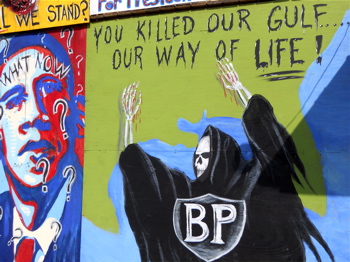
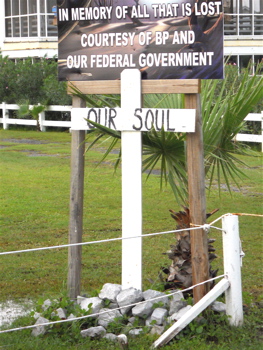
BP To Pay $18.7 Billion for Oil Spill in Gulf

The Deepwater Horizon oil platform burning off the coast of Louisiana before it sank into the Gulf of Mexico.

The Deepwater Horizon oil platform burning off the coast of Louisiana before it sank into the Gulf of Mexico.

On August 26, 2010, I wrote a firsthand account of what life looked like on tiny Grand Isle, LA, after more than 100 days had passed since an explosion on the Deepwater Horizon oil platform killed 11 crewmen and released hundreds of millions of gallons of crude into the Gulf of Mexico.

[DISPATCHES FROM THE GULF – AUG. 26, 2010]

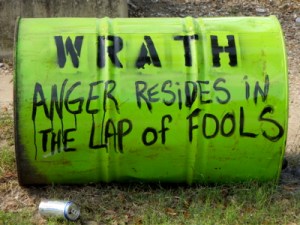
Now more than five years after the worst offshore oil spill in U.S. history fouled beaches, smothered seabirds and threatened delicate marshes, BP has settled with the Gulf states for a record setting $18.7 billion.

BP 2The Deepwater Horizon rig was being leased by BP on April 20, 2010, when it exploded and sank off the coast of Louisiana, rupturing an underwater drilling well that spewed more than 220 million gallons of oil into the warm, sea-life infested waters that border Louisiana, Texas, Mississippi, Alabama and Florida.

Grand Isle, like many coastal communities dotting the Gulf region, is in existence for its commercial and recreational fishing industry. Typically around 1,500 people live year-around on Grand Isle, but that number escalates to 20,000 during the summer months. The problem is if the waters are contaminated, no one books vacation rentals.

Located 90 miles south of New Orleans, Grand Isle is the end of the road, where the land fades into the water. I came upon this place during a scouting assignment for Sirens Media. Having finished up my graduate studies in journalism at the University of Iowa the year before, I had relocated to New Orleans and was traveling through the Gulf Coast region to find odd characters for an upcoming reality television show when I crossed the bridge to this barrier island set at the mouth of Barataria Bay.

BP 3I lived in New Orleans once previously and witnessed tragedy up close in 2005, when Hurricane Katrina came calling, but was floored by the obvious mental, physical and financial suffering the inhabitants of Grand Isle were enduring as a result of BP’s carelessness.

The immediate impact for those north of Grand Isle was the price increase for fresh seafood. Locals and tourists alike love consuming Gulf oysters on the half-shell by the dozens, and scarfing down oyster po-boys. For months after the explosion the prices skyrocketed and availability on menus was erratic. This meant local fishermen who caught all that seafood were out-of-work.

This announced settlement with BP is vindication on some level. At least the company that perpetrated such a heinous accident is being held accountable – and will have to pay for its neglect and carelessness. BP 5Included in BP’s settlement is $5.5 billion in Clean Water Act penalties and $8.1 billion in Natural Resource Damages, to help states reverse damage from the spill. It also contains another $5.9 billion in economic claims by state and local governments.

BP said the settlement would bring its full obligations to an estimated $53.8 billion. At least that is BP’s new internal budget for its total liability related to the disaster. It’s unclear how much BP will end up paying under a 2012 settlement with individuals and businesses claiming spill-related losses.

According to the Justice Department, this agreement is the largest environmental settlement in U.S. history, as well as the largest-ever civil settlement with a single entity. BP did earn a valuable concession, as much of the payments over an 18-year span could be tax-deductible.

BP 6Some things will never be the same in these small fishing hamlets, but this settlement will help repair the damage done to the Gulf economy, fisheries, wetlands and wildlife. Big business has been put on notice that it can’t just purge the environment for its nefarious profit gains.

Still, Louisiana has plenty of other major issues staring it in its face, in particular the impact of global warming on climate change, and the result of rising sea levels combined with eroding wetlands. The water is coming.

In the last 80 years, Louisiana has lost 1,900 square miles of its coastal wetlands, a land mass roughly the size of Delaware. Land loss is continuing at a rate that would dissolve an area the size of Manhattan in 18 months; if nothing is done, in the next 15 years, another 300 to 500 square miles of Louisiana will disappear. This loss of will continue if unabated until New Orleans finds itself an island behind giant seawalls, surrounded by water waiting to reclaim its prey.

BP 4New Orleans will celebrate the 10-year anniversary of Hurricane Katrina later this month. Some of the money from the BP settlement is earmarked to help pay for the ongoing levee and wetlands restoration projects to assist in keeping Louisiana’s coastal communities and largest city protected from potential storm surge. This ambitious master plan of protection comes with a hefty 50-year, $50 billion price tag.

Funding for this restoration effort and precautionary infrastructure will continue to be an ongoing fiscal fight, but for now this settlement is a momentary bright spot, a reason to celebrate, which is something New Orleans does well, and helps put a closing chapter on BP’s legacy of disaster.

If you break it, you will have to pay for it. That is the important message this settlement sends to big business trying to exploit the natural resources in America. Now Gulf Coast restoration can begin in earnest. It’s time to heal the wounds that BP tore in Gulf Coast ecosystems and communities.

Posted in Uncategorized | Leave a comment

Lexington’s El Rancho Tapatio Has The Tacos

Rancho 1Independently owned Mexican joints are everywhere these days and thank goodness, because it used to be Chi-Chi’s was the best so-called “Mexican” food available around Lexington back in the day.

Things have changed immensely for this city’s entire restaurant scene in terms of available ethnic food selections, authenticity, and depth of choices within each ethnicity. But with anything as plentiful as Mexican and Latin American food as a whole these days, some are better than others. Many have acceptable food, but it’s the atmosphere that makes the restaurant. Folks will turn out for okay food if the happy hour margaritas are cheap and especially if the restaurant is conveniently located.

I recently found a joint in El Rancho Tapatio that has excellent food, inexpensive prices, a fun atmosphere, great servers and is conveniently located. It’s hidden on a little shopping strip just off Nicholasville Road, at 144 Burt Road, ironically located behind a Taco Bell. It’s not a new place, but it’s new to me, and I’m very happy to have found it.

Gabriel enjoying his lunch and I'm working on my second giant margarita.

Gabriel enjoying his stuffed quesadilla.

Do yourself a favor and go try their tacos. Maybe skip the ground beef one, it’s rather generic, but the shredded chicken and shredded beef were both outstanding, with rich, authentic flavors bursting with each bite. I did soft tacos, but I learned they make their own corn tortillas, so try the hard or soft shell corn tortillas if they are being offered. The lunch special with three soft shell tacos, beans and rice was $7. Plus there were two-for-one margaritas. The chips seemed like they were prepared on-site, and the salsa was wicked good. The kids and I couldn’t stop eating those suckers.

I want to go back and try a couple items: Fajita Especial: grilled chicken, steak, shrimp, and chorizo with grilled onions, tomatoes and bell peppers, served with all the trimmings for $14.99; Tacos de Pescado (fish tacos) for $9.50; and one other item I didn’t see on the menu was Tacos de Carne Asada. I’ll be asking if the kitchen would mind hooking me up with an order of those next time.

I must admit that I didn’t find El Rancho Tapatio by accident. The credit goes to Rachael Ray. She published a list of “The 64 Best Tacos in the Country“, and Lexington had two restaurants on the list: El Rancho Tapatio and Panchitos. A third Kentucky restaurant also made the list, La Mexicana Restaurant in Newport.

I’m guessing they are referring to Panchito’s Express at 340 E. New Circle Road in Lex, 859-294-0022. That is on my list to try soon. Regardless, I’m duly impressed with El Rancho Tapatio. It scored three thumbs up from my kiddos and they are tough judges.

EL RANCHO TAPATIO
144 Burt Road | Lexington, KY | 859-373-9091

Posted in Uncategorized | Leave a comment